Water Damage Restoration Erie, CO
Water in the basement, a split line in a cold wall or runoff at the back door: the restoration team extracts it, dries the structure to the IICRC S500 standard and documents every step for the claim.
(888) 532-8620Pump out the flooded lower level nowActive water is treated as urgent at any hour, and every drying plan starts with a moisture map, not a guess.
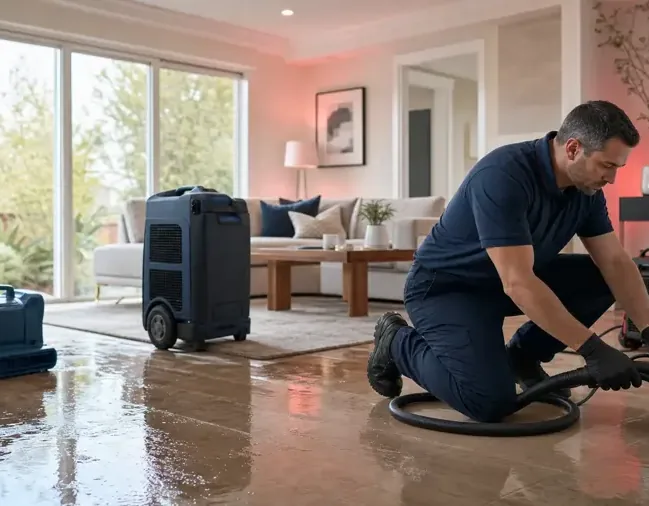
What to do while water is still reaching the basement
- 1Shut off the main. Close the main valve, usually where the water line enters the basement or utility room.
- 2Cut power to wet areas. Switch off breakers for flooded rooms, but only if the panel sits in a dry spot.
- 3Check the sump pit. If the pump is silent and the pit is full, stay out of the water and leave the cord alone.
- 4Photograph everything. Take photos and video of each wet room before anything is moved or thrown out.
- 5Call before it wicks. Water climbs drywall and soaks carpet pad within hours, so extraction should start early.
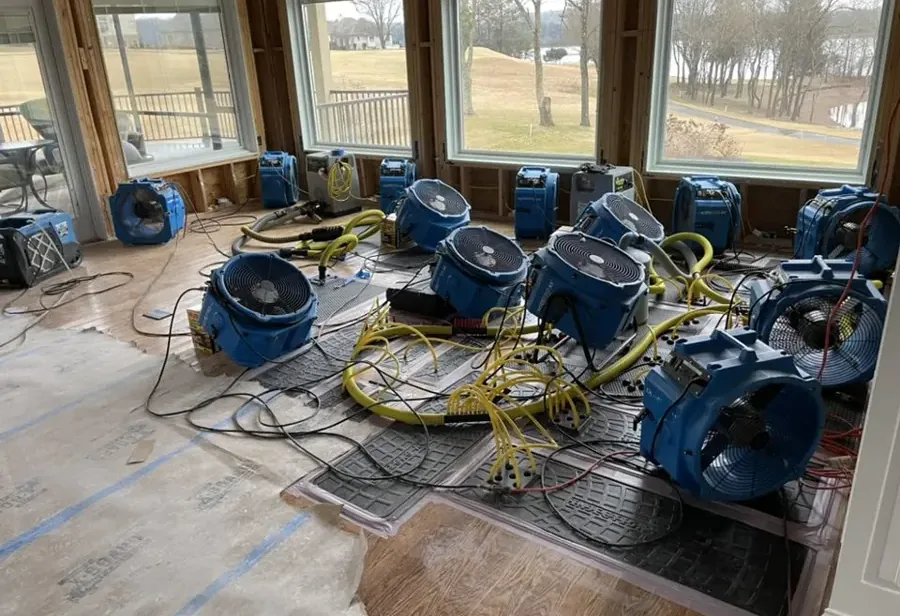
24/7 water damage restoration for Erie homes and businesses
Most water here ends up on the lowest level. The extraction crew pulls it out, maps what soaked in and dries the framing, slab and finished walls, not just the carpet.
How a measured dry-out is runWater Damage Restoration Services in Erie, CO
Twelve water services, from emergency extraction and basement flooding to frozen pipes and sewage backups, each scoped with a moisture map and dried to a measured goal.
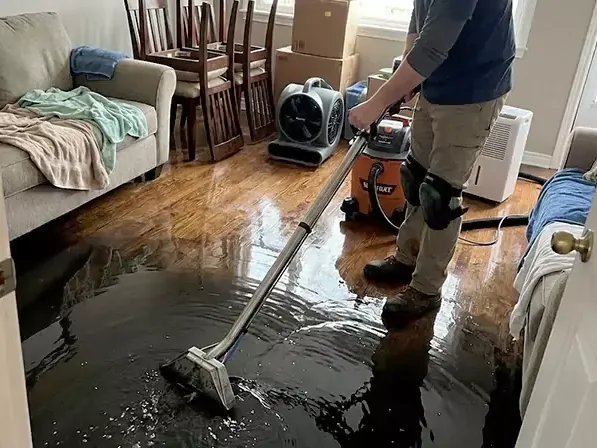 Water Extraction and RemovalTruck-mounted extraction pulls standing water out fast, before carpet pad, drywall and subfloor soak it up.See this service
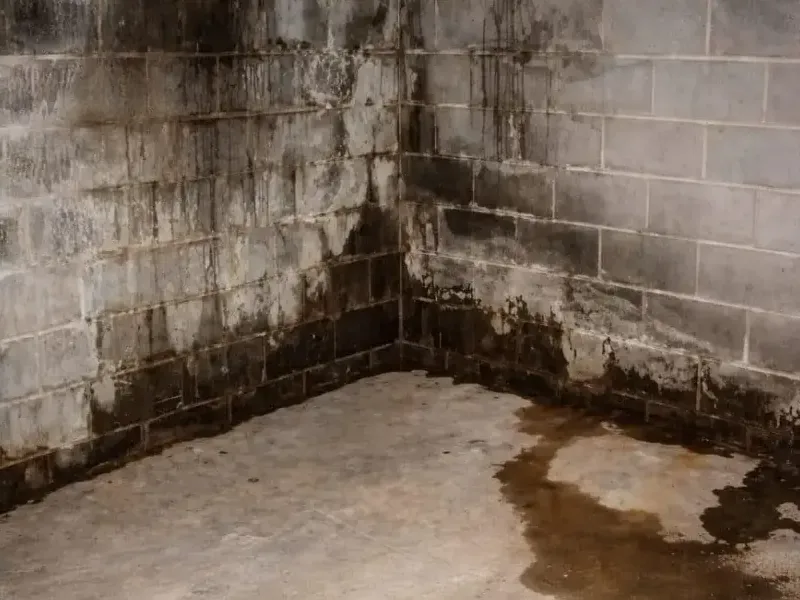 Basement Flooding CleanupFinished lower levels cleared of water, wet carpet and pad pulled, and the slab and walls dried.See this service
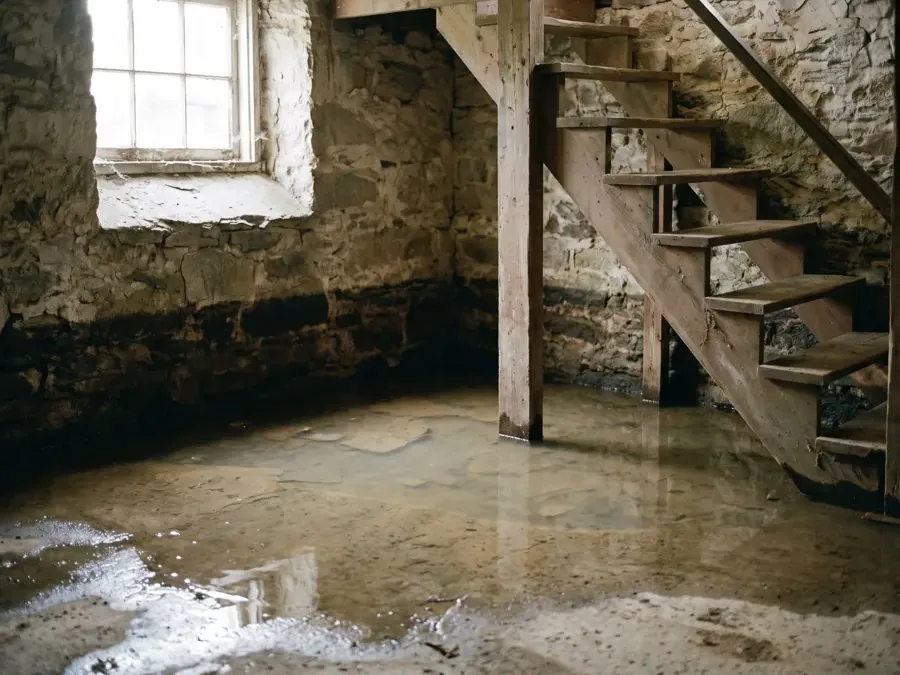 Sump Pump Failure CleanupWhen the pit overflows in a storm or an outage, the crew extracts the water and dries what it reached.See this service
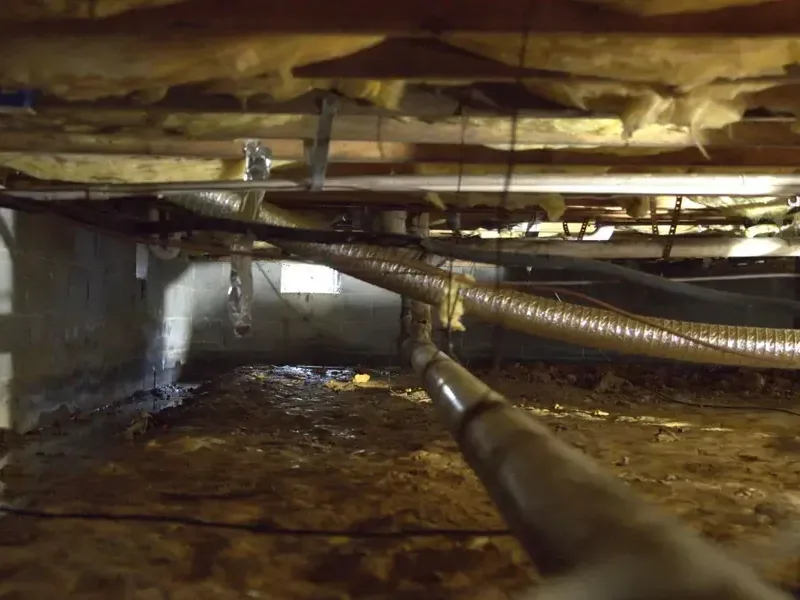 Frozen Pipe Water DamageLines that split in cold exterior walls, garages or crawl spaces get traced, opened and dried.See this service
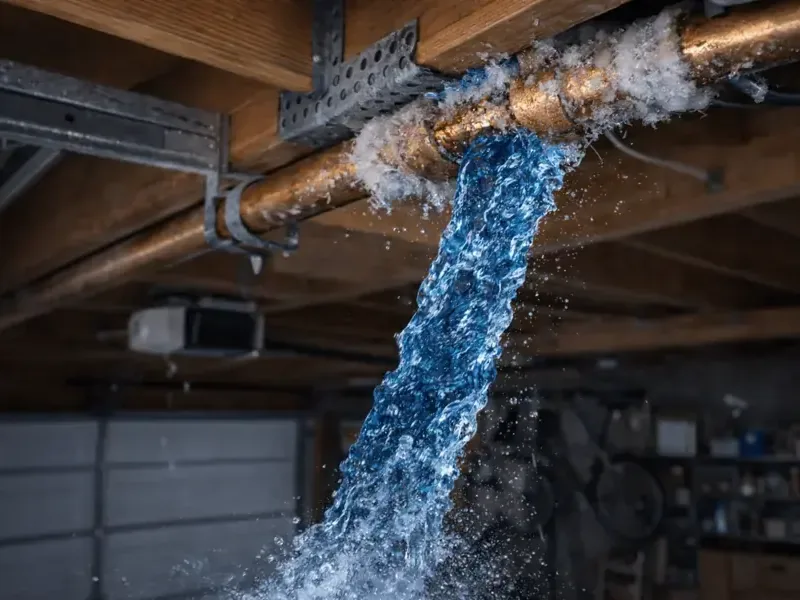 Burst Pipe Water DamageFailed fittings and joints inside walls and ceilings, extracted and dried before the damage spreads.See this service
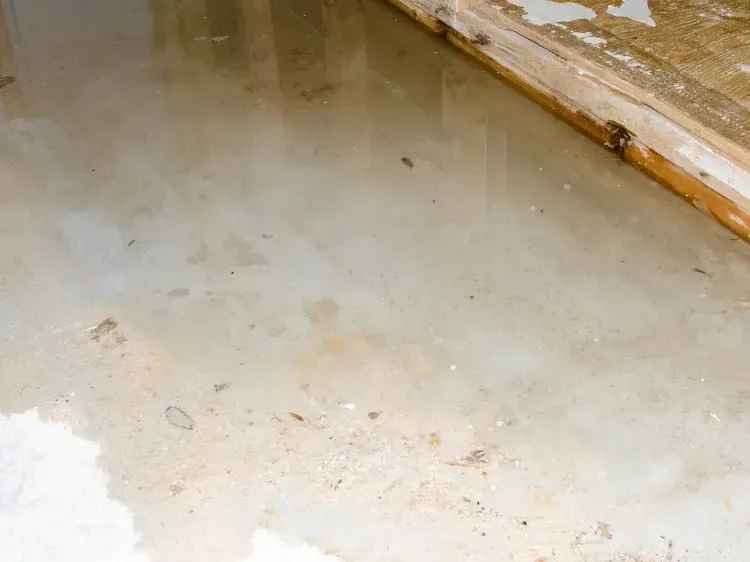 Flash Flood CleanupCloudburst runoff and creek overflow handled as contaminated water, then cleaned and dried.See this service
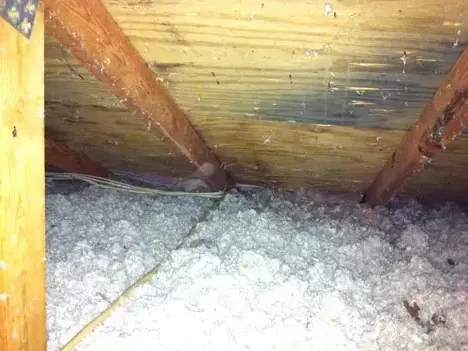 Hail and Roof Leak Water DamageHail and ice dam leaks traced from the attic down, wet insulation removed, ceilings dried.See this service
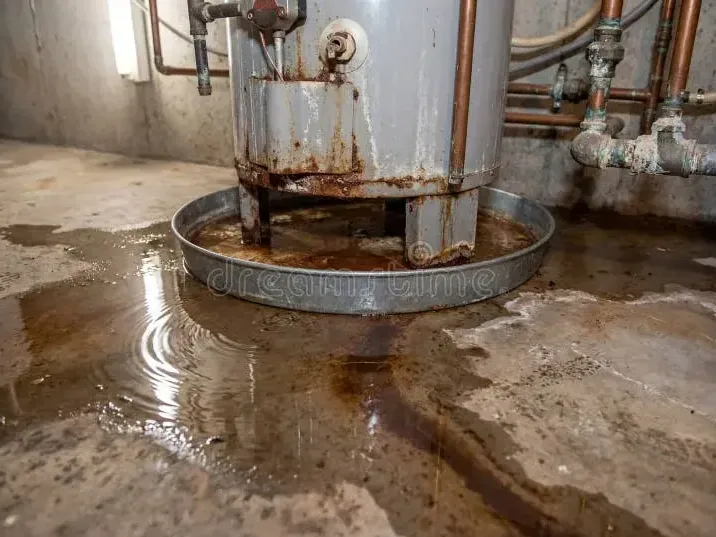 Water Heater Leak CleanupBasement and garage tank failures extracted before water runs under walls and stored boxes.See this service
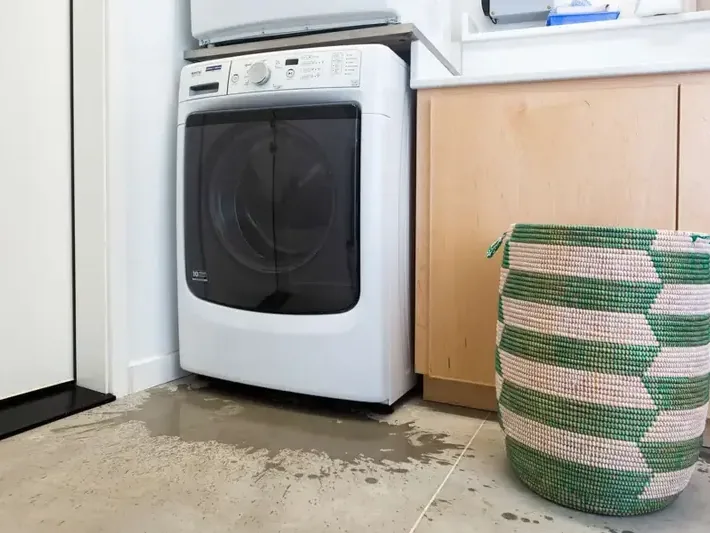 Appliance and Supply Line LeaksWasher, dishwasher, ice maker and toilet supply leaks dried out of floors and cabinets.See this service
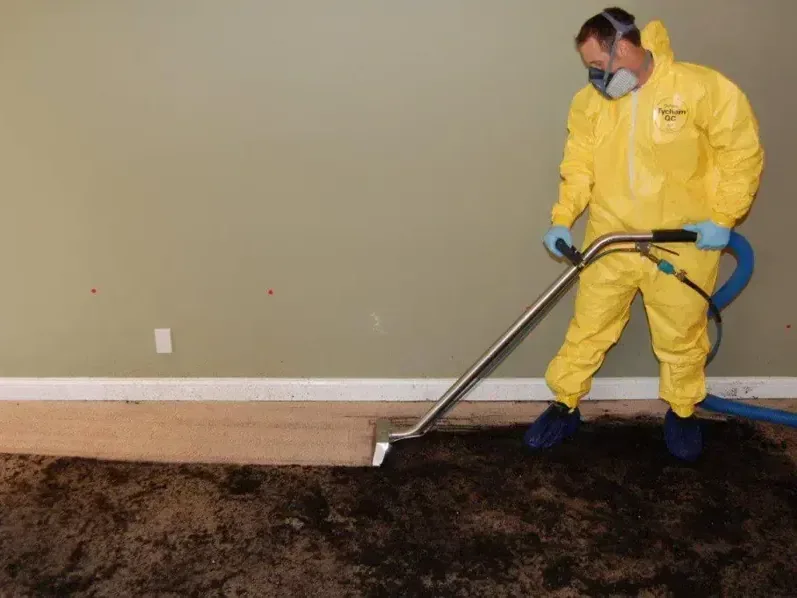 Sewage Backup CleanupFloor drain and toilet backups treated as Category 3, with affected porous materials removed.See this service
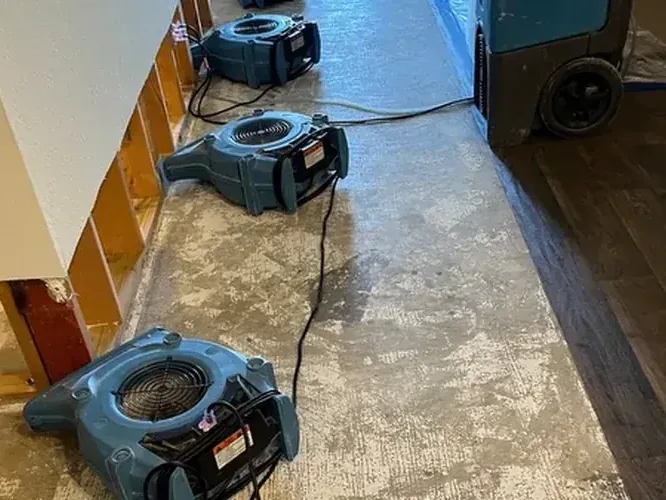 Structural Drying and DehumidificationFraming, subfloor and concrete dried to within 2 to 4 points of a dry reference.See this service
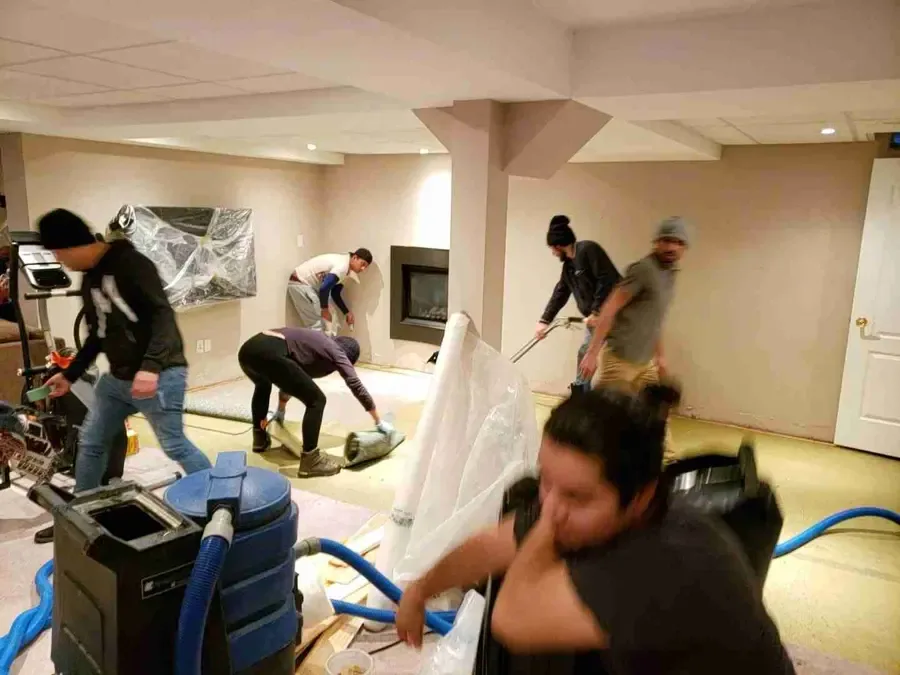 Commercial Water DamageShops, offices and clinics dried in phases to keep the business running.See this service
Water damage dried to the IICRC S500 standard
IICRC S500 is the industry drying standard. The mitigation team follows it from the first moisture reading to the last, so equipment leaves when the numbers say dry, not when a surface feels dry.
- 1
Map the moisture
Pinless meters and thermal imaging show what is wet behind walls, under carpet and in the basement slab before any equipment goes down.
- 2
Extract the water
The extraction crew removes standing water with truck-mounted units so it leaves the house instead of spreading to the next room.
- 3
Dry the structure
Air movers are set to each room's evaporation load, and LGR dehumidifiers run with the house closed up.
- 4
Verify and document
Readings are logged daily, and equipment comes out only when wet materials sit within 2 to 4 points of a dry reference.
The equipment a measured dry-out runs on
- Truck-mounted extraction units and portable extractors
- LGR dehumidifiers, with desiccants for dense Class 4 materials
- Air movers set to each room's evaporation load
- Thermal imaging cameras and pinless moisture meters
What a finished dry-out includes, from extraction to the last reading
Urgent response, day or night
The response team dispatches around the clock and treats active water as urgent on weekends, holidays and storm nights.
IICRC S500 structural drying
The drying team classifies the loss by category and class, then sizes air movers and LGR dehumidifiers to the actual load.
A claim file built during the work
Moisture maps, daily psychrometric logs and timestamped photos taken before demolition give the adjuster a clear record.
Basement and freeze know-how
Finished lower levels, sump pits, window wells and lines in cold exterior walls are the everyday losses local crews plan for.
What does water damage restoration cost in Erie, CO?
Most residential water mitigation jobs here run about $1,200 to $9,000. A sewage backup or flood runoff through a finished basement can reach $8,000 to $20,000 or more, because the category of water, the square footage, the material class and how fast drying started set the number.
Small contained leak
- One room or a small area
- Extraction and two to three days of drying
- Daily moisture readings
Finished basement or several rooms
- Carpet, pad and lower drywall removed
- A full lower level or several rooms
- LGR dehumidifiers and air movers
Category 3 or flood runoff
- Sewage or outside flood water
- Porous materials removed and treated
- Containment and protective gear
Ranges are typical, not a quote. Mitigation, meaning extraction, removal and drying, is priced apart from rebuilding. For a closer planning range, run the water damage cost calculator.
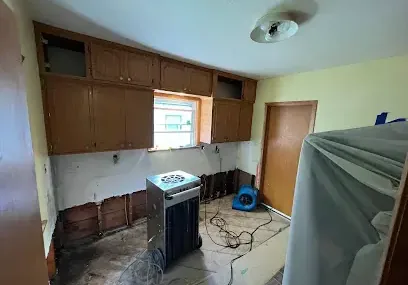
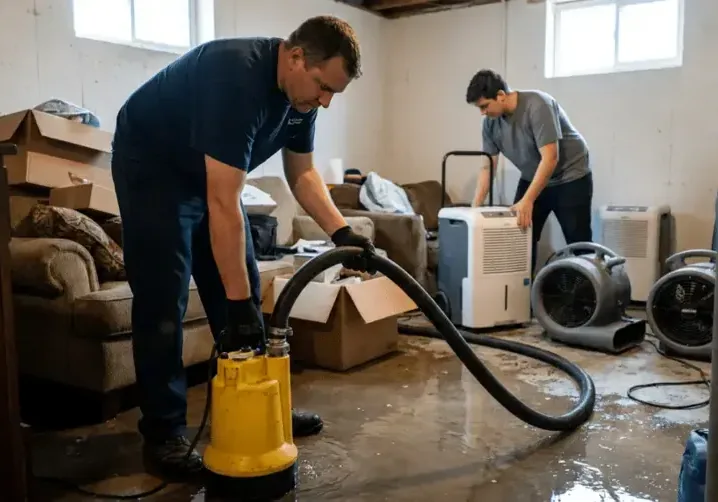
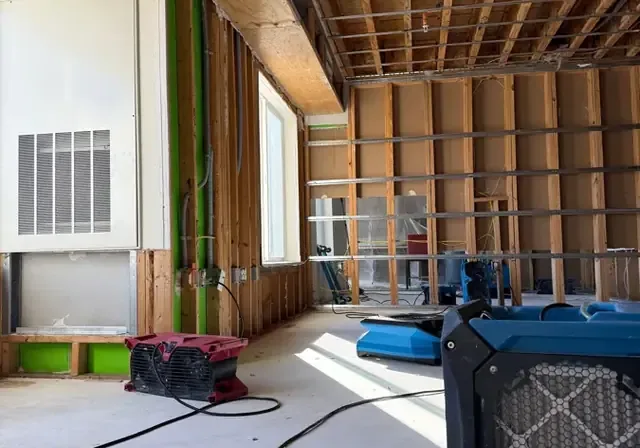
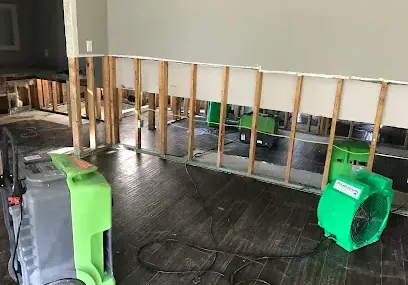
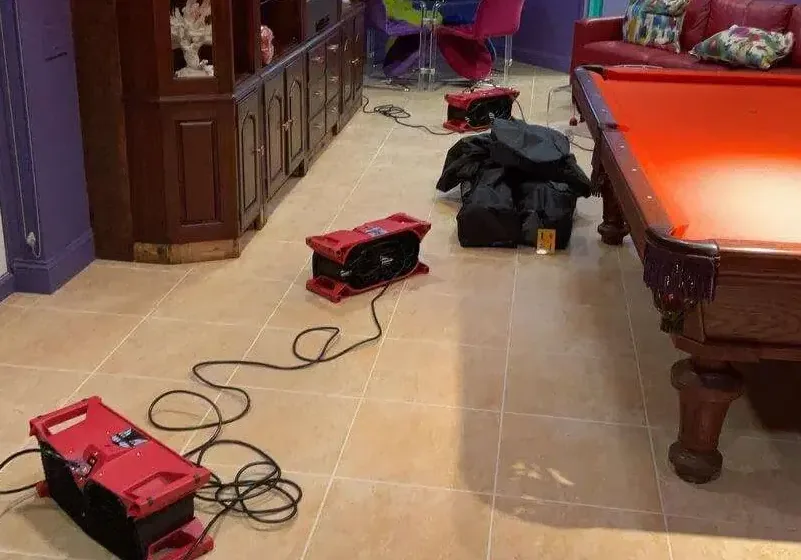
What extraction and structural drying look like inside a home
Documentation built for your insurance claim
A water claim is decided on the file. The restoration team builds that file while the work happens, so the adjuster sees what was wet and how it dried.
Check your own policy
A sudden and accidental discharge, such as a split supply line, is usually handled differently from surface water that floods in from outside, which falls under flood coverage.
Sewer backup and sump overflow often need their own endorsement. Coverage depends on your policy, so it is worth reading it and calling your insurer early.
- A moisture map from the first visit
- Daily psychrometric readings and drying logs
- Timestamped photos taken before any demolition
- The category and class of the loss
- A line-item scope in the format adjusters expect
Water damage restoration across Erie and nearby Front Range towns
Neighborhoods and corridors
Nearby towns
One call puts a 24/7 extraction crew on the road
Local restoration pros cover Old Town, the subdivisions along the parkway and the newer streets toward Highway 7 and Highway 52, plus the towns next door.
Have the cross street ready and say which levels are wet; that decides which equipment goes on the truck.
(888) 532-8620Send extraction gear to the wet basement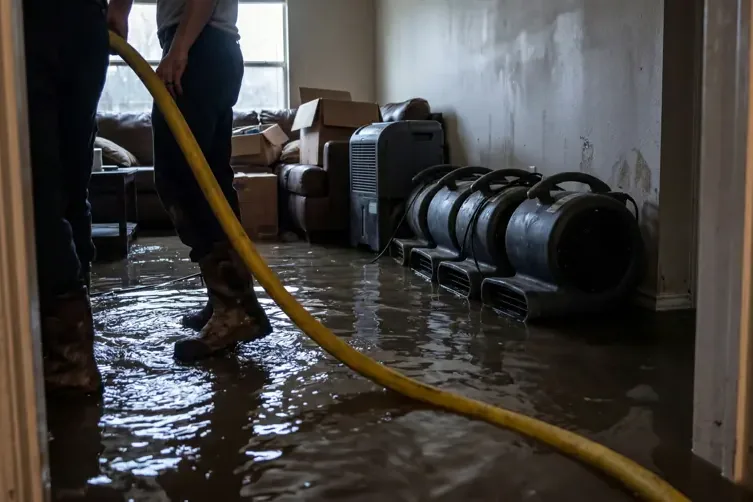
Water damage in Erie, CO: the local risk profile
The town grew from a coal camp settled in 1867 into a suburb of about 30,000 people, and that mix of old mine ground, creek floodplain and basement homes shapes most water losses here.
- Summer cloudbursts. Slow storms can outrun street drainage. During one flash flood warning, county emergency managers named the town the hardest hit spot in Boulder County, with 9 to 12 inches of standing water across Erie Parkway and basements taking water.
- Old mine ground. Abandoned room-and-pillar coal workings lie 50 to 150 feet under parts of the area, and settling ground can crack foundations and break water and sewer lines.
- Winter freezes. Hard Front Range cold snaps split supply lines in exterior walls, garages and crawl spaces, and the leak often shows only after the thaw.
- Hail and wind-driven rain. Spring and summer hail bruises shingles and flashing, so the next storm can drip into attic insulation and the ceiling below.
- Basements on swelling soil. Swelling clay soils and seepage press on basement walls, and a sump pump that stalls in a power outage lets groundwater rise across the floor.
Every category of water damage, from clean to black
Category 1, clean water
A split supply line, a burst fitting or an overflowing tub. The extraction crew pulls it fast, before it picks up contamination from flooring and walls.
Burst pipe water damageCategory 2, gray water
Washer and dishwasher discharge or sump water that sat for a while. Soaked materials are cleaned with care or removed when they cannot be saved.
Appliance and supply line leaksCategory 3, black water
Sewage backups and flood runoff from outside. It counts as Category 3 from the first minute, so porous materials below the waterline come out.
Sewage backup cleanupErie water damage questions, answered plainly
How fast does a crew respond to water damage in Erie?
Active water is treated as urgent at any hour, including nights, weekends and holidays. Dispatch runs 24/7, and the crew brings extraction and drying gear on the first visit so work can start once the moisture map is done.
Will insurance pay for water damage restoration?
It depends on your policy and the cause. Sudden, accidental leaks such as a split pipe are often covered, while surface flooding needs flood coverage and sump or sewer backup may need an endorsement. The restoration team documents everything so your insurer has a clear file.
Why do so many local water losses end up in the basement?
Water runs downhill, and most homes here have a basement. Window wells, floor drains, sump pits and cold exterior walls are the usual entry points, and finished lower levels hold carpet, pad and drywall that soak up water quickly.
How long does drying take?
Most contained losses dry in three to five days. Dense materials such as a concrete slab, hardwood or plaster take longer. The drying team takes readings every day and keeps equipment running until wet materials sit within 2 to 4 points of a dry reference.
What is the IICRC S500 standard?
IICRC S500 is the industry standard for professional water damage restoration. It covers how a loss is inspected, how water is categorized and classed, how drying is set up and how the result is verified with moisture readings.
What should I do in the first hour?
Shut off the main water valve, switch off power to wet areas if the panel is dry, move small valuables up off the floor and take photos of every wet room. Then call so extraction can start before water wicks into the walls.
When does wet drywall have to come out?
Drywall that soaked up Category 1 water can often be dried in place if extraction starts early. Drywall touched by sewage or flood runoff, or wet long enough to swell and crumble, is cut out above the water line and replaced later.
Why is a sewage backup handled differently?
Sewage is Category 3 water from the start. Crews wear protective gear, set containment, remove porous materials below the waterline and apply an EPA-registered antimicrobial at the label dwell time before drying begins.
How is the cost of water damage figured?
Cost follows four drivers: the category of water, the square footage that got wet, the material class and how fast drying started. Equipment days and removal of wet materials set most of the number. The cost calculator gives a planning range.
Why does fast drying matter so much?
Wet building materials can start to grow mold within 24 to 48 hours. Fast extraction and steady dehumidification keep materials below that threshold and limit how much has to be removed.
Water in your basement or ceiling? Get the drying started tonight.
Extraction, structural drying and a claim-ready file, around the clock from Old Town to the interstate.
(888) 532-8620Start the lower-level water removal