Water Damage Restoration in Broomfield, CO
A burst pipe, a failed water heater or a backed up drain can soak floors and lower walls before anyone has found a mop. Extraction and structural drying start with one call, and moisture readings set the plan.
(888) 532-8620Call now about the soaked floorHomes, apartments and commercial space across the city and county can call at any hour for extraction, drying and a plain written scope.
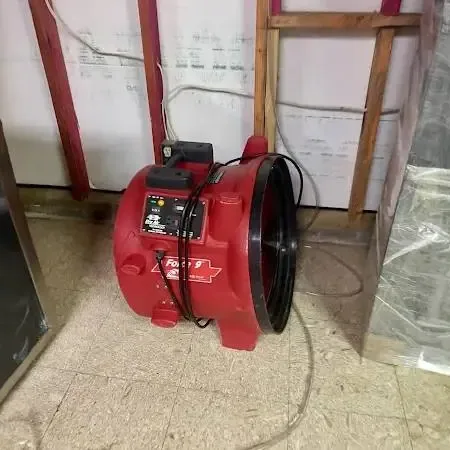
What to do while water is still spreading
- 1Stop the source Close the main valve or the appliance supply, and keep out of rooms where water reaches outlets.
- 2Call right away Describe what is wet and where it came from so the right pumps and dryers are packed.
- 3Lift what you can Move rugs, books and small furniture to dry ground. Leave heavy items for the crew.
- 4Photograph the damage Take clear pictures of wet walls, floors and contents before anything is removed, for the claim file.
- 5Avoid sewage water If the water came from a drain or toilet, keep children and pets away and touch nothing without gloves.
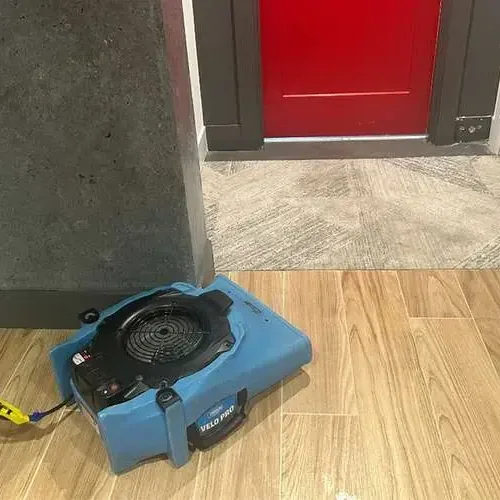
Wet materials get harder to save with time
Water moves into subfloor, insulation and drywall faster than it looks on the surface. Early extraction and measured drying keep a repair small and the claim file clear.
Reach a crew about dryingTwelve water problems, twelve separate pages
Each service below covers a different kind of water event, and each one links to a page with its own steps, price ranges and questions.
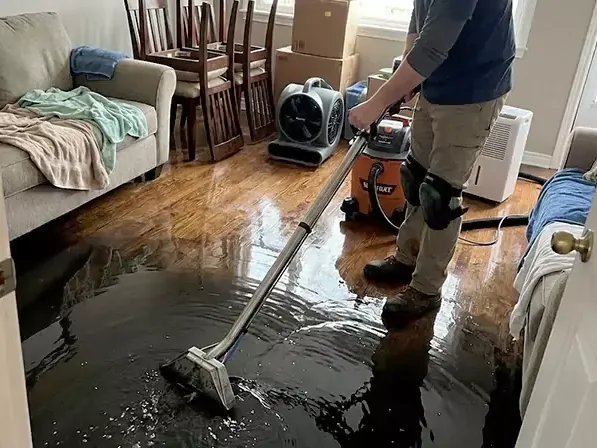 Water Extraction and RemovalPumps and wands pull standing water from floors, whether a leak or a utility failure started it.See this service
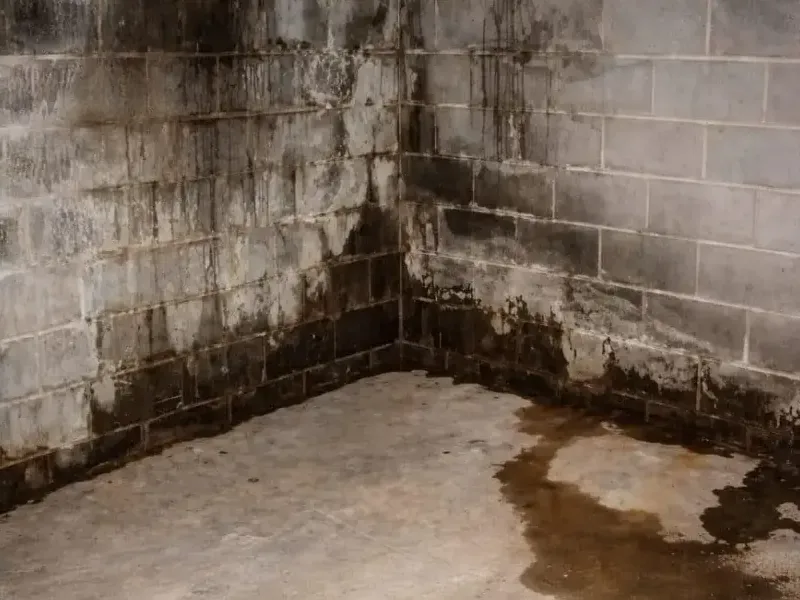 Basement Flooding CleanupWet carpet, lower drywall and concrete are removed or dried in homes that have a basement.See this service
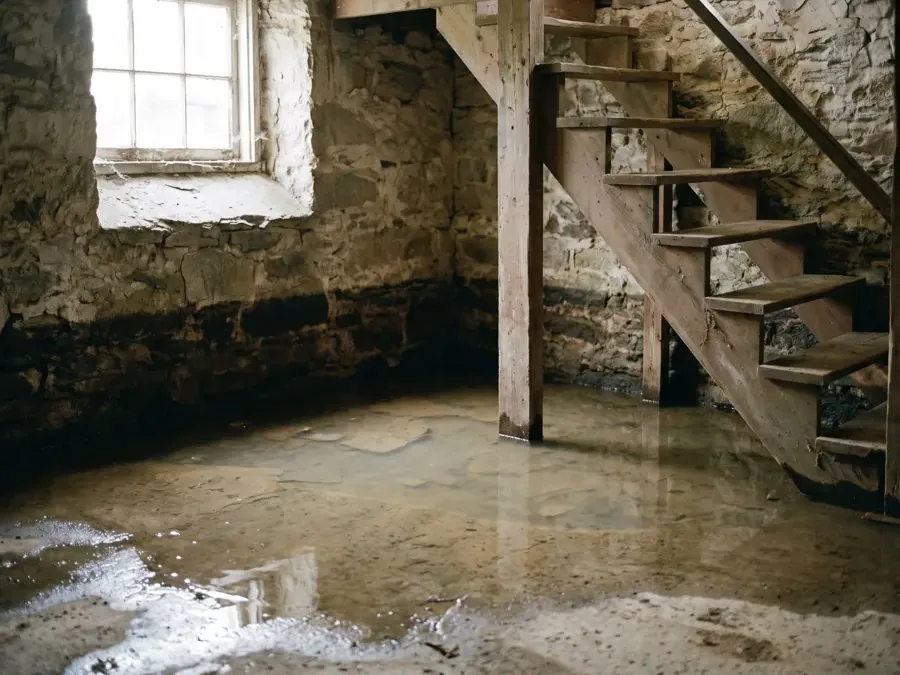 Sump Pump Failure CleanupWhen a sump pump stops, water collects below grade, and cleanup removes it and dries what it reached.See this service
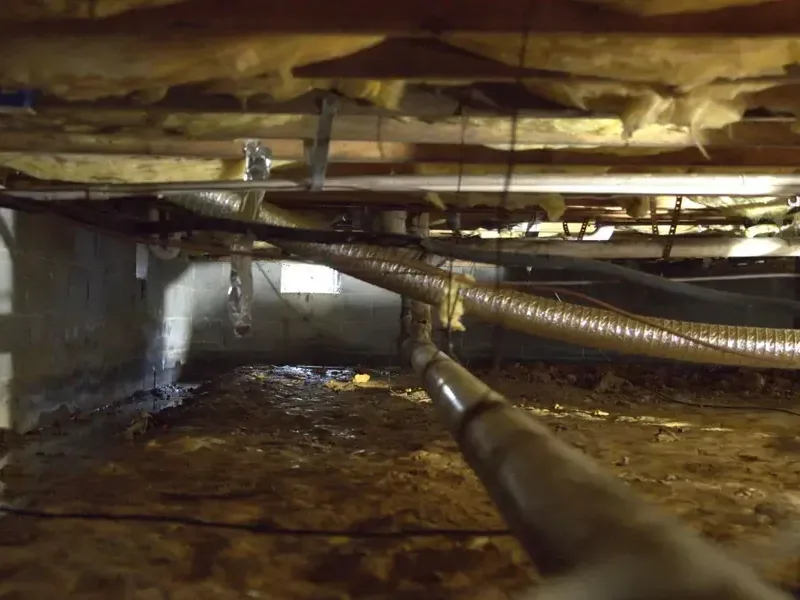 Frozen Pipe Water DamageA hard freeze can split exposed or unheated pipes, and the thaw is when water shows.See this service
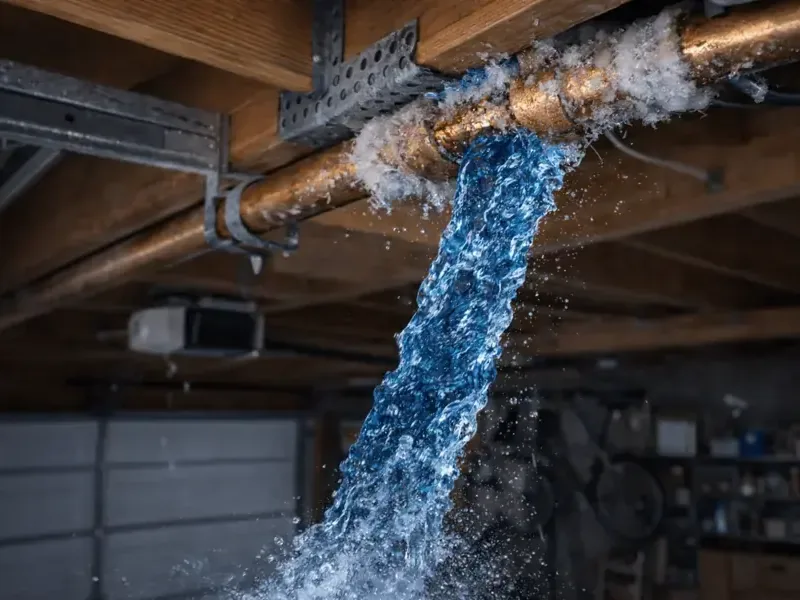 Burst Pipe Water DamageA failed fitting or split pipe can flood two levels, so extraction and wall drying start together.See this service
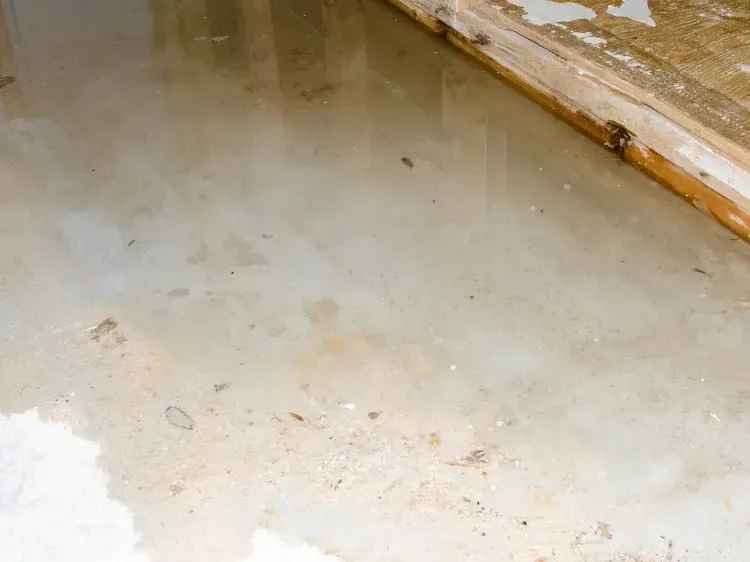 Flash Flood CleanupStorm runoff at an entry or lower level is pumped out, then the area is dried.See this service
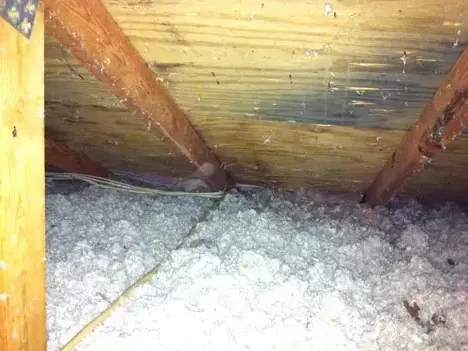 Hail and Roof Leak Water DamageSnow melt and spring rain find weak spots, and wet attic insulation and ceilings are dried out.See this service
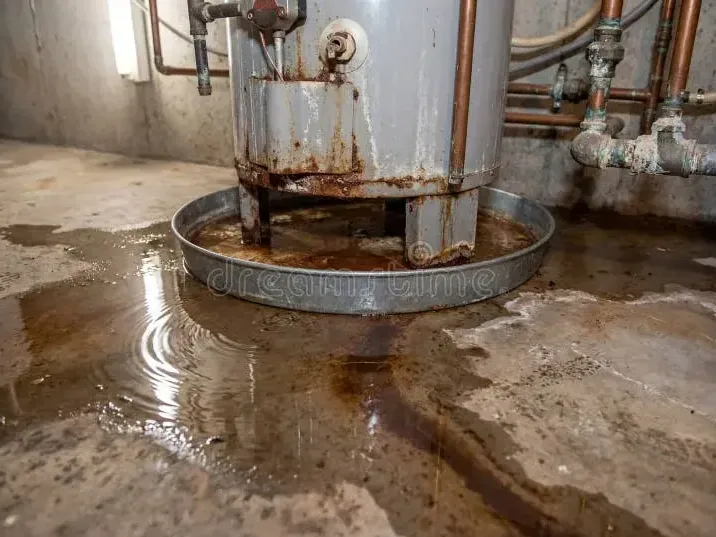 Water Heater Leak CleanupA tank that fails at once or drips slowly leaves floors and walls to extract and dry.See this service
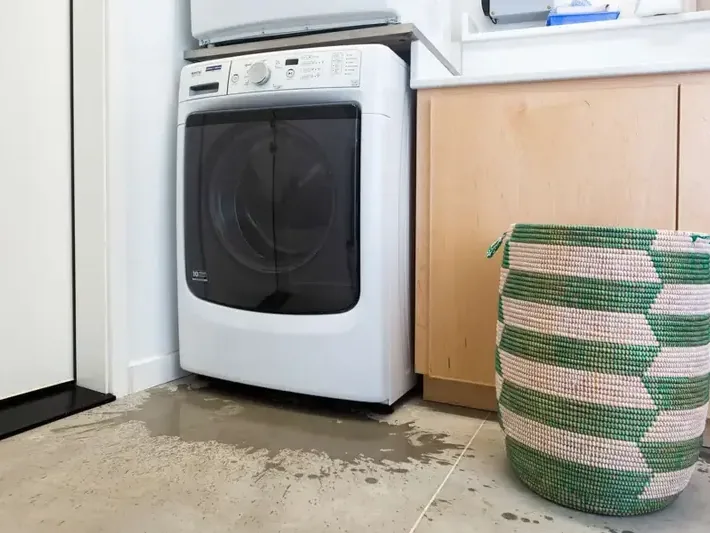 Appliance and Supply Line LeaksA hidden dishwasher or washing machine leak in a shared building can reach neighboring units before anyone sees it.See this service
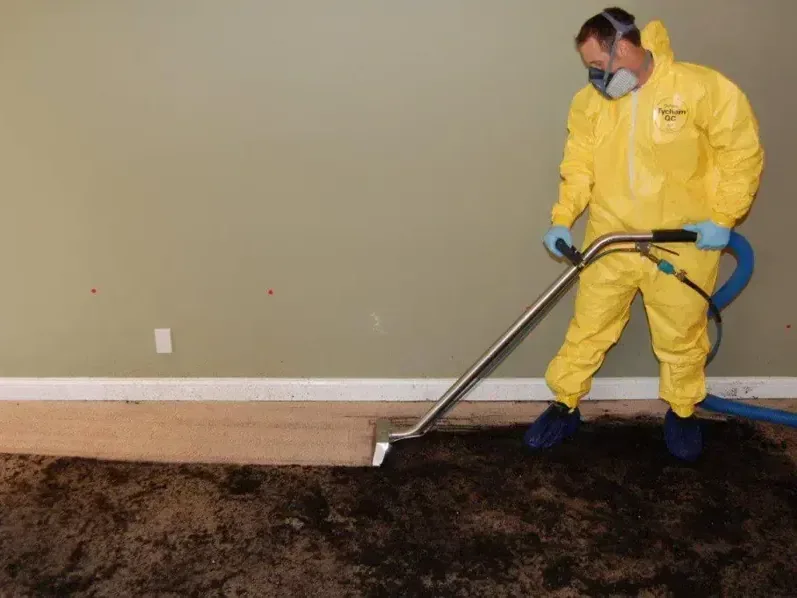 Sewage Backup CleanupSewage backup is contaminated water, so it is removed, cleaned and disinfected whatever the cause.See this service
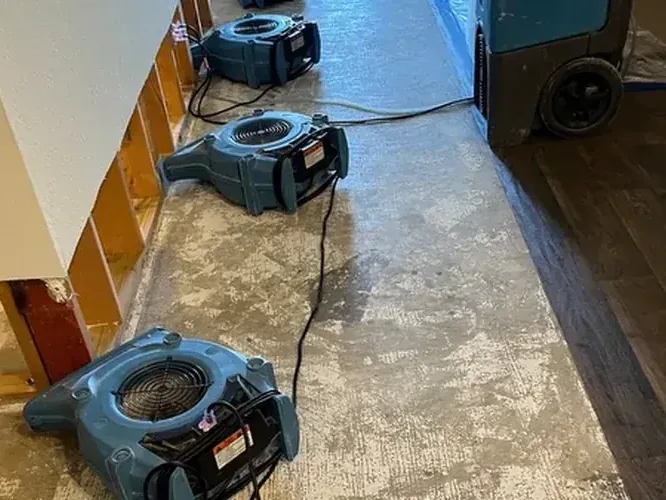 Structural Drying and DehumidificationFraming, subfloor and drywall are dried to target readings before any repairs begin.See this service
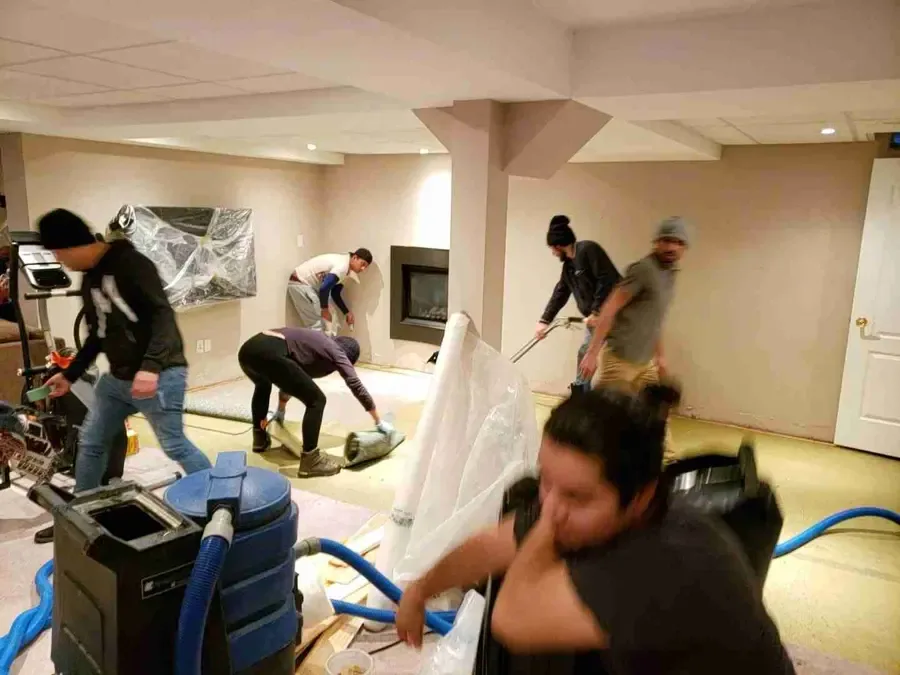 Commercial Water DamageOffices, shops and large floors get extraction and drying planned around business hours.See this service
Dry means measured, not guessed
A room is called dry when moisture meters read the same as an unaffected wall, not when it feels dry to the hand. Drying targets are written down and checked each visit.
- 1
Map the water
Moisture meters and thermal imaging show which walls, floors and ceilings are wet, including the ones that look fine.
- 2
Remove the water
Pumps and extraction wands take out standing water first, then carpet padding or other materials that cannot be saved are cut out and bagged.
- 3
Dry the structure
Air movers push air across surfaces while dehumidifiers pull moisture from the room until the framing reads dry.
- 4
Confirm and hand off
Final readings are compared with the dry standard, the equipment is removed and the records are ready for repairs or the adjuster.
The equipment a measured dry-out runs on
- Truck-mounted extraction units and portable extractors
- LGR dehumidifiers, with desiccants for dense Class 4 materials
- Air movers set to each room's evaporation load
- Thermal imaging cameras and pinless moisture meters
What every job includes from the first call
Moisture readings first
Meters and thermal imaging map the wet areas before any material is removed, so only what has to come out comes out.
Written scope and price
The scope lists rooms, materials and equipment with a price range before heavy work begins, so nothing arrives as a surprise.
Daily drying records
Readings are logged on each visit, and the dehumidifiers come out only when the framing and subfloor reach dry targets.
Clear claim support
Photos, moisture logs and an itemized scope go to the adjuster in a format the claim file can use.
Typical price ranges by size of loss
Most residential water jobs cost between $1,200 and $20,000 or more. The biggest factors are how many square feet are wet, how far the water spread, whether it was clean or contaminated, and how many days of drying equipment the structure needs.
Small area
- One room or a hallway
- Clean water caught early
- Extraction and a short drying run
Several rooms or a lower level
- Carpet padding and wall bottoms removed
- Several days of drying equipment
- Moisture logs for the adjuster
Contaminated or flood water
- Category 3 water from drains or runoff
- Disinfecting plus larger material removal
- Longest drying and monitoring
Final cost depends on the measured scope, and a written price range is shared before heavy work begins. Insurance coverage varies by policy, so ask the adjuster what applies.
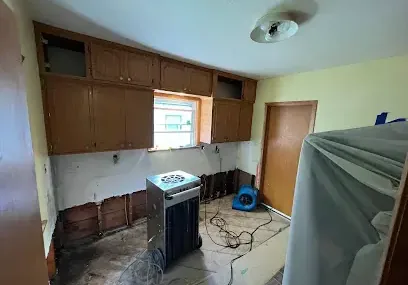
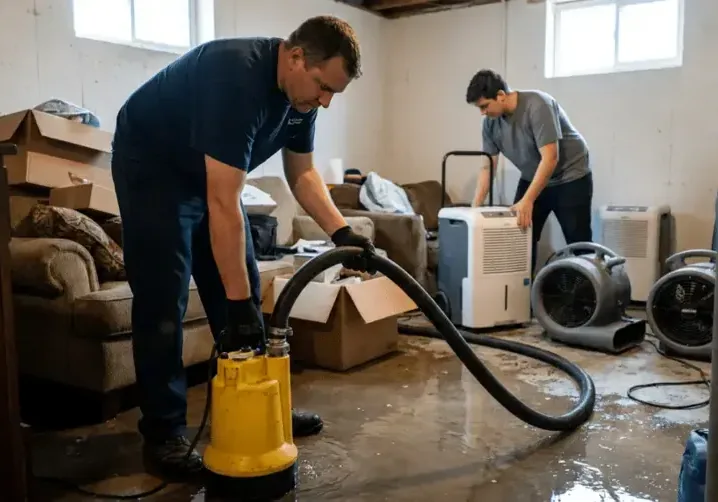
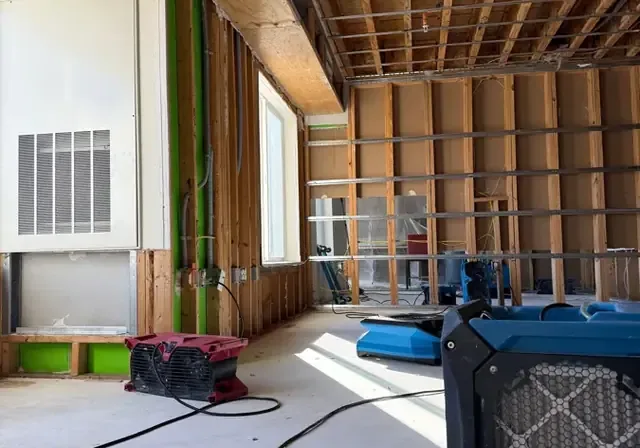
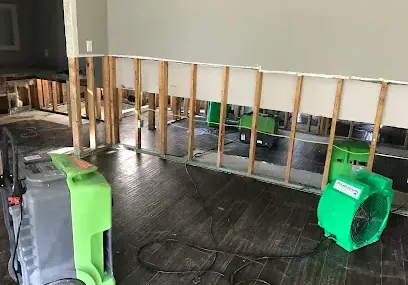
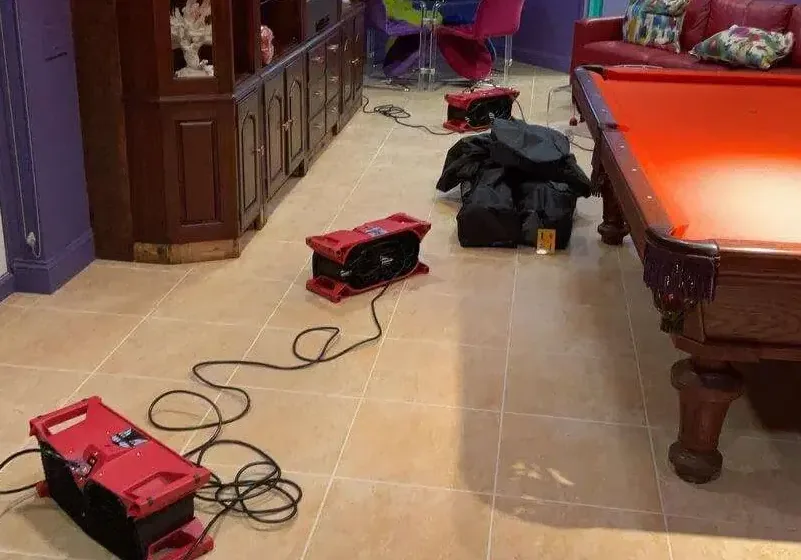
What drying equipment looks like on a job
Working with the insurance adjuster
Many water losses go through a homeowner or commercial policy, and the documents the adjuster asks for are easiest to gather while the work is still underway.
If the owner files the claim
Call the carrier early and report the loss in plain terms: what failed, when it happened and which rooms are wet. Keep damaged items until the adjuster has seen them.
Keep receipts for any emergency purchases, such as tarps or a rented fan, and ask the carrier what is reimbursable before throwing anything away.
- Dated photos of every wet room
- Moisture readings from each visit
- An itemized list of removed materials
- Equipment placement and days in use
- The written scope with its price range
Water damage service across the city and county
Main roads and corridors
Nearby towns served
Service for homes, apartment buildings and commercial space
Water damage calls reach from residential streets and apartment buildings to the Interlocken office park, with the same extraction and drying steps in all three.
The city and county reaches into Adams, Jefferson and Weld counties as well as Boulder County, and one call confirms coverage for a specific address.
(888) 532-8620Confirm coverage for an address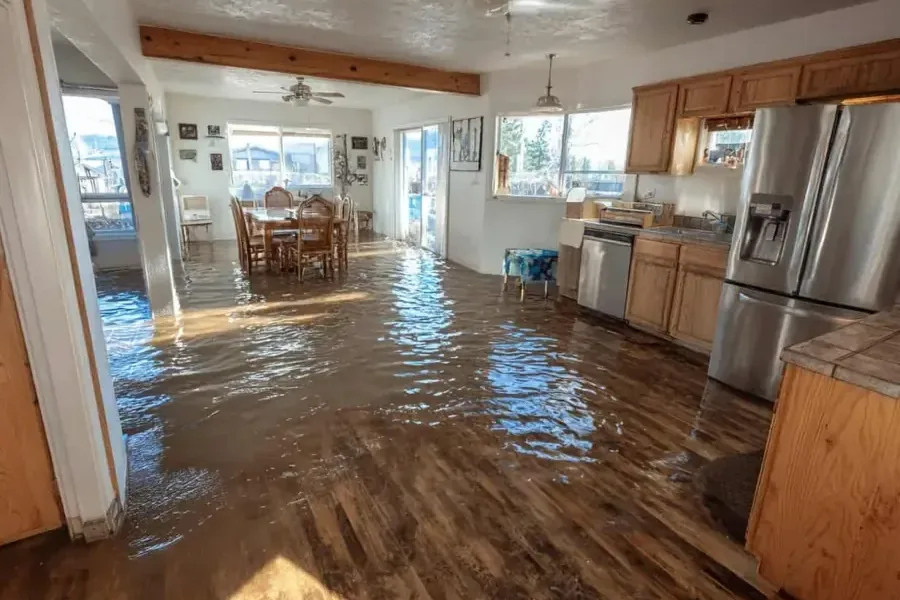
Water risks that shape local jobs
Parts of Broomfield lie in the regulatory floodplain along the City Park Channel and the South Tributary, and the city and county offers an online floodplain search tool that shows every floodplain.
- Channel runoff The regulatory floodplain follows the City Park Channel and the South Tributary, so heavy runoff can push water toward doors and lower levels nearby.
- Map revision work The city and county is applying to FEMA for a map revision along the City Park Channel and South Tributary, with the floodplain widening in places and narrowing in others.
- Water main breaks A Denver7 report described a main break at Sheridan Boulevard and East 9th Avenue that buckled and collapsed a section of street.
- Sewage and drains Wastewater service falls under city and county Public Works, and a backup through a home drain is contaminated water whatever caused it.
- Winter freezes Mean daily lows stay below freezing from November through March and reach 18.3 F in January, which puts pipes in unheated spaces at risk.
Other water problems that bring a crew in
Pipes that split
A split pipe or failed fitting can empty into walls and ceilings until the valve is shut, so cavity drying matters as much as extraction.
See burst pipe responseHidden appliance leaks
A washing machine hose or dishwasher supply can leak behind a cabinet for days, and in a shared building the water may reach the unit below.
Appliance leak cleanupSewage backups
When a drain or toilet pushes wastewater back into the home, affected materials are removed and the area is cleaned and disinfected before drying starts.
Sewage backup cleanupBroomfield water damage questions
How quickly does water damage spread?
Water wicks up drywall and across subfloor quickly, and a 24 to 48 hour window is when mold growth can begin if materials stay wet. Early extraction and drying limit how much has to be removed. Water that sits under flooring is the hardest to see.
Should power stay on in a wet room?
No. Outlets, panels and appliances near water are a shock hazard, so power to a wet room should be shut off, by an electrician if the panel is in the water, before anyone steps in.
How is the price of a water job set?
A written scope lists rooms, materials and equipment, with a price range, before heavy work begins. Size of the wet area, water type and drying days drive the number.
Can sewage backups be handled?
Yes. A sewage backup is contaminated water whatever caused it, so protective gear is used, porous materials are removed, surfaces are disinfected and only then does drying begin. Hard floors are usually saved, while carpet is not.
How long do drying machines run?
Most water jobs need several days of air movers and dehumidifiers, and the daily meter readings decide when the equipment leaves. Dense materials and finished lower levels take the longest.
Can wet carpet be saved?
Carpet that got clean water can sometimes be extracted and dried in place, while the pad is usually removed. Carpet that touched sewage or flood water is discarded. Hardwood and tile are judged by meter readings after extraction.
Where can an owner see floodplain maps?
The online floodplain search tool offered by the city and county shows every floodplain, so an address can be checked before a storm. Flood damage itself is cleaned up the same way whether or not a property is mapped.
Does the crew work on businesses too?
Yes. Offices, shops and larger buildings get a drying plan scheduled around business hours, with moisture logs and photos for the property manager and the carrier. Large floors are dried in zones so each area can be tracked.
Will insurance cover the damage?
Coverage depends on the cause and the policy. Sudden pipe breaks and appliance failures are often covered, while rising flood water needs a separate flood policy. The adjuster decides, and the crew supplies photos and readings.
What is Category 3 water?
Category 3 water is grossly contaminated, such as sewage or flood runoff. It is removed along with porous materials it touched, and the area is cleaned and disinfected before drying starts, rather than dried in place.
Water in the house? Start the drying clock
One call starts the scope: what is wet, what has to come out and which equipment the drying needs.
(888) 532-8620Request a written scope