Sewage Backup Cleanup in Erie, CO
A floor drain or toilet backup puts Category 3 water into the lowest level of Erie homes. The mitigation team sets containment, extracts the sewage, removes porous materials below the waterline and treats every surface before drying, 24/7.
(888) 532-8620Report the floor drain backup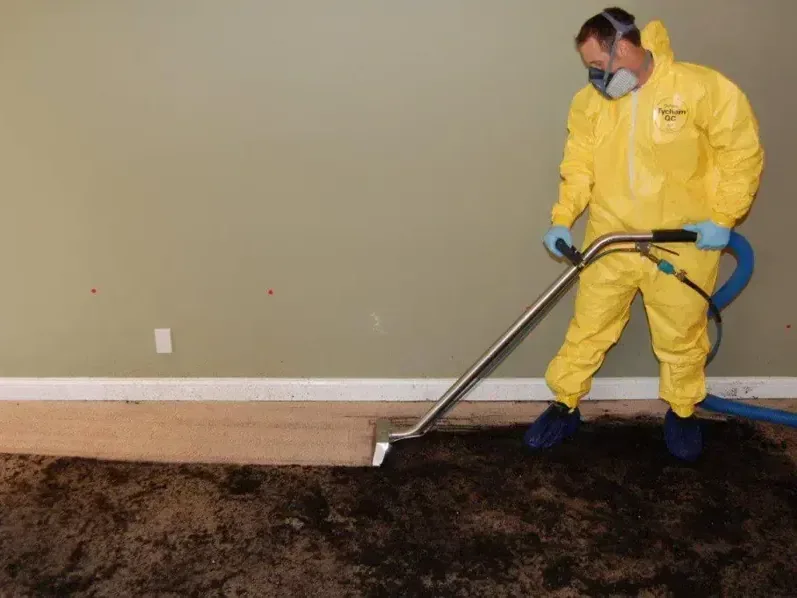
First steps for sewage backup cleanup
- Stop using water.Do not flush, shower or run appliances that drain.
- Keep everyone out.Keep people and pets away from the affected area.
- Do not touch it.Avoid contact with sewage and anything it soaked.
- Call for cleanup.Category 3 water needs protective gear and containment.
How sewage backup cleanup is handled, step by step
- 1
Contain
Barriers and negative air go up.
- 2
Extract
Sewage is removed with protective gear.
- 3
Remove and treat
Porous materials out; surfaces disinfected.
- 4
Dry
Measured drying runs inside containment.
What does sewage backup cleanup cost in Erie, CO?
Sewage backup cleanup here typically runs $2,000 to $15,000. A large or long-standing backup can reach $15,000 to $35,000 or more, depending on the square footage, the material class, how much has to be removed and how fast drying started.
Small floor drain backup
- Containment and extraction
- Antimicrobial treatment
- Dehumidified drying
Finished basement backup
- Carpet, pad and drywall removed
- Negative air containment
- Daily moisture readings
Large or long-standing backup
- Several rooms affected
- Insulation and cabinets removed
- Extended drying and treatment
Ranges are typical, not a quote: the category of water, the square footage, the material class and how fast drying started move the number most. Run the water damage cost calculator for a closer planning range.
Why backups happen in basements
Sewage is Category 3 water from the moment it leaves the drain. It carries bacteria and viruses, so the cleanup follows a stricter process than any clean water loss, and nothing porous that it touched below the waterline is kept.
The basement floor drain is the lowest opening in the house, so it is where a blocked or overloaded sewer line shows up first. Tree roots, grease, collapsed lateral pipe and heavy storms that overload the system all push sewage back up. Settling ground over old mine workings can also crack sewer lines.
- Floor drains: the first place a sewer backup appears.
- Basement toilets and showers: overflow when the main line is blocked.
- Storm overload: heavy rain can surcharge the sewer system.
How Category 3 cleanup is done
Crews wear PPE and set containment with negative air so contamination does not spread upstairs. Sewage is extracted, then carpet, pad, insulation and drywall below the waterline are removed and bagged. Hard surfaces are cleaned and an EPA-registered antimicrobial is applied and left for the full label dwell time.
Drying after decontamination
Only after cleaning does drying begin. The drying team runs LGR dehumidifiers and air movers inside the containment, takes daily readings and documents every stage, including the category, the removal scope and the treatment, for the claim file.
Further reading: Ready.gov flood safety and Colorado Division of Insurance.
Sewage backup cleanup across Erie and nearby towns
Nearby coverage reaches Lafayette, Frederick, Broomfield, Louisville, Longmont, Dacono, Firestone and Superior.
The restoration team covers ZIP 80516, from the older houses of Old Town around Briggs Street out along County Line Road to the newer subdivisions between Highway 7, Highway 52 and the I-25 frontage.
Related water damage services
Sewage Backup Cleanup questions in Erie
Is a sewage backup an emergency?
Yes. Sewage is Category 3 water that carries bacteria and viruses, and it soaks deeper the longer it sits. The response team dispatches 24/7.
Can sewage-soaked carpet be cleaned?
No. Carpet, pad and other porous materials that touched sewage below the waterline are removed and disposed of, because they cannot be made safe.
Is sewage backup covered by insurance?
Often only with a sewer or water backup endorsement. Check your own policy and keep the documentation of the cleanup.
What is an EPA-registered antimicrobial?
A disinfectant registered with the EPA for the job, applied to cleaned surfaces and left on for the dwell time on its label so it can work.
Who clears the sewer line?
A plumber or sewer contractor clears or repairs the line. The restoration team handles the cleanup, treatment and drying inside the home.
Sewage backup in the lower level?
Category 3 water needs protective gear, containment and removal of porous materials. The mitigation team handles it start to finish, 24/7.
(888) 532-8620Start sewage extraction and treatment