Flash Flood Cleanup in Erie, CO
Summer cloudbursts can outrun street drainage in Erie and push muddy runoff through doors, window wells and floor drains. The mitigation team treats it as contaminated, extracts it, removes what it ruined and dries the structure, 24/7.
(888) 532-8620Pump the runoff out of the house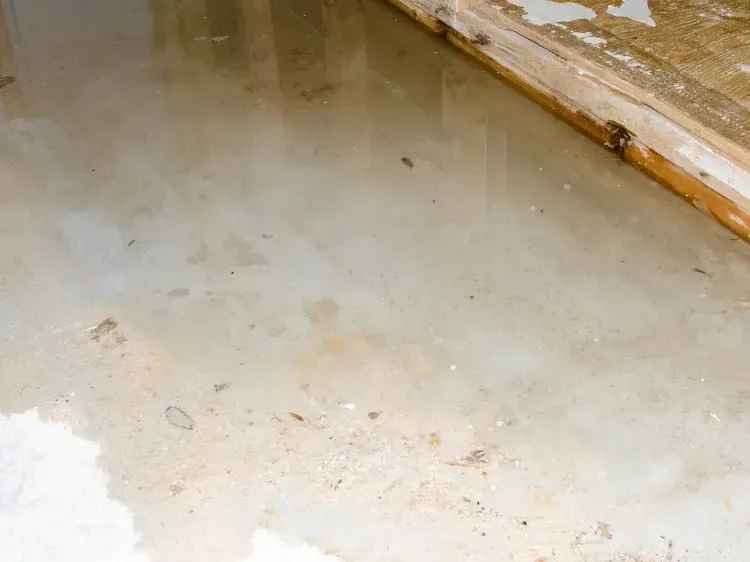
First steps for flash flood cleanup
- Stay out of flood water.It can hide live current, sharp debris and contamination.
- Do not run fans yet.Wait until the water is out and the power is confirmed safe.
- Document the waterline.Photograph how high the water reached on walls and items.
- Call for extraction.Mud and runoff should come out before they soak deeper.
How flash flood cleanup is handled, step by step
- 1
Make it safe
Power, gas and structure are checked.
- 2
Extract
Water, mud and silt are removed.
- 3
Remove and treat
Porous materials come out; surfaces are treated.
- 4
Dry
Measured drying runs until readings say dry.
What does flash flood cleanup cost in Erie, CO?
Flash flood cleanup here typically runs $2,500 to $18,000. Deep or long-standing flood water can reach $15,000 to $40,000 or more, depending on the square footage, the material class, how much has to be removed and how fast drying started.
Shallow runoff at one entry
- Extraction and silt removal
- Lower drywall removed
- Antimicrobial treatment
Finished basement flooded
- Carpet, pad and drywall removed
- Containment and cleaning
- LGR drying and daily readings
Deep or long-standing flood water
- Several rooms or levels
- Insulation and cabinets removed
- Extended structural drying
Ranges are typical, not a quote: the category of water, the square footage, the material class and how fast drying started move the number most. Run the water damage cost calculator for a closer planning range.
The local flood record
Flash flood water is not clean water. It runs across streets, yards and fields before it reaches a house, carrying soil, oil and whatever else it picks up. That is why flood runoff is handled as Category 3 from the start, no matter how clear it looks.
Major floods hit the town in 1890, 1921 and 1972, and a dike was built around nearby Coal Creek after the 1972 flood. More recently, during one flash flood warning, county emergency managers named the town the hardest hit spot in Boulder County, with 9 to 12 inches of standing water across the parkway.
- Window wells: fill fast and spill into basements.
- Low lots near the creek: take runoff and seepage first.
- Floor drains: back up when storm and sewer systems are overloaded.
Why flood-soaked materials come out
Carpet, pad, insulation and drywall that touched runoff cannot be made safe by drying alone. The crew removes porous materials above the waterline, shovels out mud and silt, cleans the remaining surfaces and applies an EPA-registered antimicrobial before drying begins.
Drying after the mud is gone
With the contaminated materials out, the drying team opens the space to airflow and runs LGR dehumidifiers. Studs, slab and block walls are tracked with daily readings until they reach the drying goal, and every step is documented for a flood claim.
Further reading: National Weather Service flood safety and FloodSmart, the National Flood Insurance Program.
Flash flood cleanup across Erie and nearby towns
Nearby coverage reaches Lafayette, Frederick, Broomfield, Louisville, Longmont, Dacono, Firestone and Superior.
The restoration team covers ZIP 80516, from the older houses of Old Town around Briggs Street out along County Line Road to the newer subdivisions between Highway 7, Highway 52 and the I-25 frontage.
Related water damage services
Flash Flood Cleanup questions in Erie
Is flash flood water dangerous?
Yes. Runoff carries soil, chemicals and bacteria, and it can hide live electrical current. It is treated as Category 3, and crews wear protective gear while removing it.
Does homeowners insurance cover flash flooding?
Usually not. Surface water from outside generally needs flood insurance, such as a National Flood Insurance Program policy. Check your coverage and keep the documentation.
Why can't flooded carpet be dried and kept?
Carpet and pad that touched runoff absorb contaminants that drying does not remove, so they are taken out and disposed of.
How high is drywall cut after a flood?
Drywall is cut above the highest point the water reached, so the wet and contaminated portion is fully removed.
How long does flood cleanup take?
Extraction and removal usually take one to two days, and drying takes several more. Deeper or longer floods take longer.
Storm runoff came into the house?
Flood water carries soil and contamination into every porous material it touches. The mitigation team removes it and dries the structure, 24/7.
(888) 532-8620Start the flood runoff cleanup