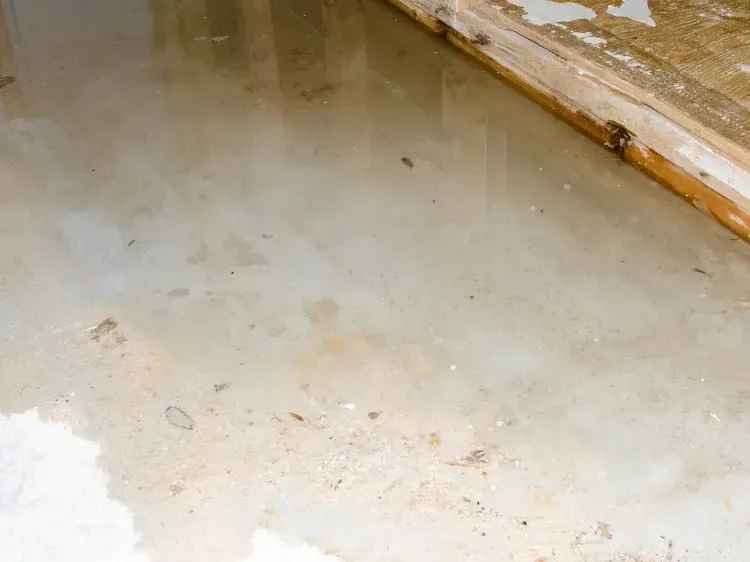
A flash flood warning in September 2013 left 9 to 12 inches of standing water across Erie Parkway, the hardest hit spot in Boulder County, and some basements flooded as well. The event shows how a cloudburst works in a growing town: the road fills first, then the water finds the lowest part of a house.
Key takeaways
- Water that crossed a road or a yard is treated as contaminated, so wet carpet, pad and low drywall are usually removed rather than dried in place.
- Never wade into water that could reach outlets, a panel or a furnace; the power decision belongs to the utility or an electrician.
- Photos of the waterline and a written list of wet belongings, made before anything moves, are the base of a claim file.
- Standing water comes out first, wet materials come out second, and the structure is dried until moisture readings match a dry reference.
- A lower level that is wet after a dry week points to a broken pipe or a failed sump pit, not the storm.
What the 2013 flooding showed about Erie Parkway
The warning left 9 to 12 inches of standing water across Erie Parkway. It was the hardest hit spot in Boulder County, and basements flooded when the heavy rain ran to low ground.
Flooding is not new to the area. Major floods came in 1890, 1921 and 1972, and a dike was built around Coal Creek after the 1972 flood.
Several busy corridors cross the town, including Briggs Street, Highway 7 and Highway 52, and a cloudburst can put water on any of them. Roads are where a flood is noticed first, but they are rarely where it does the most damage.
For a household, the road water and the basement water are one event seen from two places. The second one damages a home, and it can keep building after the street drains.
That is the reason flash flood cleanup starts with the inside of the house, not the road outside it.
The first hours inside a flooded lower level
The first hours decide how much of the room can be saved. Two things matter most: safety, then a record of what the water touched.
Safety comes before cleanup
Floodwater that has crossed a road, a driveway or a yard carries soil, fuel and sewage residue. It is handled as contaminated from the start.
Never wade into water that could reach outlets, a panel or a furnace. If the power is still on, leave that decision to the utility or an electrician.
- Keep children and pets out of the wet area.
- Wear boots and gloves if contact cannot be avoided.
- Do not run a household vacuum on standing water.
Document before anything moves
Photograph the waterline on the walls, the wet furniture and the stored boxes before anyone lifts a thing. Then write down what was in the room.
That list and those photos become the base of the claim file.
- Take wide photos from the stairs, then close ones with a tape measure or a coin for scale.
- Keep receipts for pumps, fans, storage and a hotel night if the house is unsafe.
- Note the date and the time the water was found.
What the restoration team removes first
The first job is water extraction, because every other step waits on standing water leaving the room.
Truck-mounted and submersible pumps move the volume, and extractors lift what is left from carpet and concrete. Pulling the water out early also stops it from climbing into drywall by wicking.
After that, anything that soaked up floodwater and cannot be cleaned is taken out of the house.
- Carpet and pad that sat in floodwater.
- Drywall and baseboards below the waterline.
- Wet insulation inside the lower walls.
- Cardboard boxes and upholstered furniture that cannot be sanitized.
Common mistakes after a basement floods
Most extra damage after a flood comes from well meant steps taken in the wrong order. A few habits are worth dropping early.
- Running a fan over wet carpet before the water is extracted, which spreads moisture through the room.
- Keeping a soaked pad in place because the carpet on top looks fine.
- Throwing items away before they are photographed.
- Painting over a stain before the wall behind it is dry.
- Waiting for the adjuster to arrive before standing water is removed.
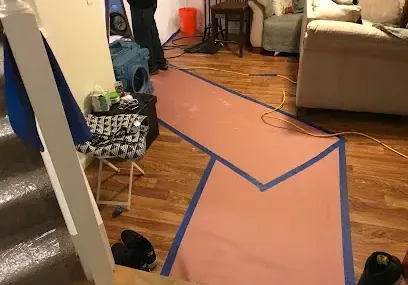
Cleaning and drying a flooded basement
Hard surfaces that survive are cleaned and treated, because floodwater is not clean water. That covers concrete, framing and anything left standing.
A full basement flooding cleanup then moves into drying, which is slower than most people expect.
Concrete and framing hold water longer than they feel
Concrete can feel dry on top while it still holds water below. Framing and the bottom plate of a wall soak water up and release it slowly.
Air movers push moisture off surfaces and dehumidifiers pull it from the air, so structural drying runs until the readings say it is done.
Readings decide when drying ends
Moisture readings are taken on the first day and again every day after. The goal is a match with a dry reference, usually within 2 to 4 points.
A surface that feels dry to the hand is not the finish mark.
When the basement water did not come from the storm
A wet lower level after a dry week usually has another source. A stalled sump pit, a failed water heater or a broken pipe can look like flood damage.
The town also sits over abandoned room-and-pillar mine workings, 50 to 150 feet deep under parts of Erie. Subsidence can break water and sewer pipes and pull a basement away from the structure.
- Check whether the water is clean or has a sewage smell.
- Look at the sump pit, the water heater and the washing machine hoses.
- Watch for a damp patch that returns after the area has been dried.
Getting the claim file ready
Policies differ on surface water and flood, so the first call to the insurer should ask which policy responds to this loss.
The restoration team keeps moisture logs, photos and an equipment record, so the file shows what was wet, what was removed and when drying finished.
Claims move faster when the file is complete on the first day. A missing photo or an undated list is the usual reason they slow down.
- Ask the insurer what type of loss it classes this as.
- Keep damaged items until the adjuster says they can go.
- Save the drying logs and the final readings.
Questions
How much water counts as a flood inside a house?
Even a thin layer on a basement floor is enough to wick into pad, drywall and baseboards. Depth matters less than how long the water sits.
Is floodwater from a road the same as a pipe leak?
No. Water that crossed a road or a yard is treated as contaminated, so porous materials are removed. A clean supply pipe leak caught early can often be dried in place.
Can a flooded basement be dried without removing drywall?
Sometimes, if the water was clean and the wall is only damp. Drywall that soaked up floodwater is usually cut out and replaced.
Does water on a road mean a basement is at risk?
Not always, but road water and basement water come from the same rain. A home near a low spot, a window well or a failed sump pit is the first place to look.
What should be photographed first after a flood?
The waterline on the walls, the depth on the floor and the items at the bottom of shelves and boxes, all before anything is moved.