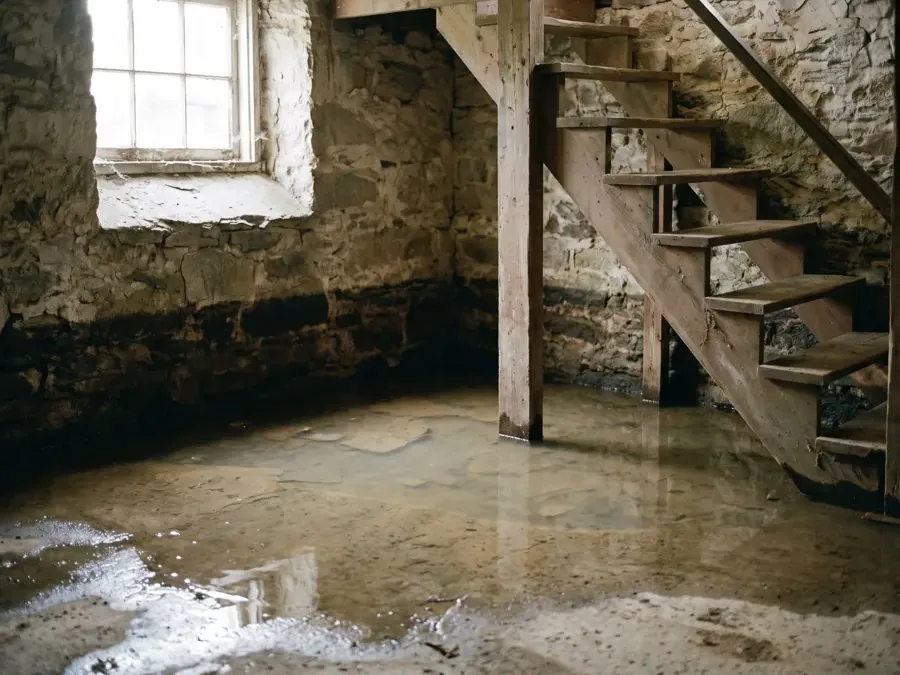
On August 14, 2014, about 1.15 inches of rain fell between 3 and 4 pm, flooding roads in northeastern Longmont and stranding vehicles at Emery Drive and Collyer Street. A storm like that tests any sump pump in a very short window.
Key takeaways
- Short, intense downpours like the August 14, 2014 storm can overwhelm a sump pit that handles ordinary rain.
- A pump fails for one of two reasons: it stops running, or it runs and cannot keep up.
- Rainwater that comes in from outside is treated as contaminated, so porous materials that soaked it up are removed.
- A battery backup and a clear discharge outlet are the checks to make before the next storm.
- Drying is finished when moisture readings in concrete and framing match a dry reference.
What the August 2014 storm showed about Longmont
That afternoon brought the heaviest rainfall the city had seen since the 2013 flood. Roads flooded in the northeastern part of town, and the Oligarchy Ditch briefly left its banks near Lanyon Park.
A Longmont Times-Call weather consultant called it the heaviest single thunderstorm in town since the flooding of September 2013.
None of that says what happened in any one lower level. It does show how fast a dry afternoon can turn into a storm that strains drainage.
Water follows gravity, so the lowest level of a building is where a sudden downpour usually ends up. That is also where a sump pit sits.
Storms of this kind are short, and the damage is done quickly. The practical lesson is to check the pump before a forecast, not during one.
How a sump pump fails in a downpour
A sump pump has one job, which is to empty the pit before water reaches the floor. In a heavy storm it can fail in two different ways.
The pump stops running
A power outage, a tripped breaker or a stuck float switch can leave the pit filling with no pump to empty it. Storms are exactly when the power is most likely to flicker.
- Power loss during the storm.
- A float switch jammed against the side of the pit.
- A pump motor worn out from heavy use.
The pump runs but cannot keep up
Inflow can exceed the pump's output when the rain is heavy and the ground is already wet.
A clogged discharge outlet or a failed check valve sends water straight back into the pit.
- An undersized pump for the amount of inflow.
- A discharge outlet buried in leaves or frozen shut.
- A check valve that no longer holds water above the pump.
First steps when the pit is overflowing
Water in a lower level is a safety problem before it is a cleanup problem. If it could reach an outlet, a panel or a furnace, the room stays off limits.
A stalled pump is the whole job of sump pump failure cleanup: extract the water, remove what soaked it up and dry the structure.
If the pit is overflowing but the room is still dry, a bucket or a wet vacuum rated for water can buy a little time. Anything that plugs into an outlet near standing water is a risk, so the safest step is to wait for help.
- Stay out of water that could reach electrical outlets or a panel.
- Move valuables and electronics upward if it is safe to do so.
- Photograph the pit, the waterline and the wet belongings.
- Do not run a household vacuum on standing water.
How the lower level is extracted and dried
Once the room is safe, the work follows a set order. Water comes out first, then wet materials, then the structure is dried.
A lower level that is dried properly stays usable. One that is closed up wet is the one that smells musty a few weeks later.
Extraction and removal
Rain that came from outside is treated as contaminated, because it crossed roofs, yards and streets. Pumps take out the standing water, and carpet, pad and low drywall that soaked it up are removed.
The same steps apply to flash flood cleanup after a creek or ditch overflow.
Drying to a reference
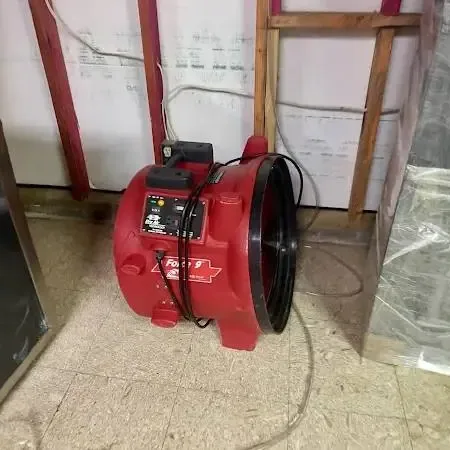
Air movers and dehumidifiers run while readings are logged each day. The job ends when concrete and framing match a dry reference, not when the room looks dry.
Drying also protects what was not touched by water, because damp air travels into nearby rooms.
Checking the pump before the next storm
A sump pump can be tested on a dry day with a bucket and a little patience. The test is cheap compared with a flooded room.
It also helps to know where the pit is, what powers the pump and where the water goes once it leaves the house. Those three answers cover most failures.
- Pour a bucket of water into the pit and watch the float lift and the pump empty it.
- Make sure the discharge outlet outside is clear and drains away from the house.
- Check the check valve for water falling back into the pit.
- Add a battery backup that works when the power is out.
- Keep the pit cover on and clear of debris.
Records that help after a sump pump failure
A sump pit that fails leaves clues, and the clues help an insurer and a repair crew. A short record made on the day is worth more than memory later.
The City of Longmont maps a 100-Year Floodplain and offers a way to check whether a home sits in it, along with flood insurance requirements and preparation steps. That lookup helps with flood decisions, but a sump pit can fail on any property, mapped or not.
- The time the pump stopped, if it is known.
- Photos of the pit, the float and the discharge outlet.
- A list of wet belongings with rough values.
- Any alert from a water sensor or a pump alarm.
Where to find more local help
Other water problems have their own steps, and the local water damage pages lay out each one. A sump pump failure often turns up another issue, such as a leaking window well or a slow drain.
Questions
What should happen if a sump pump stops during a storm?
Keep clear of water near electrical equipment, move belongings upward and photograph the pit. A cleanup team then extracts the water and starts drying.
Is rainwater in a lower level clean water?
No. Rain that crossed roofs, yards and streets is treated as contaminated, so porous materials it soaked are removed.
How long does a lower level take to dry?
It depends on how much water came in, how long it sat and what the structure is made of. Daily readings, not a calendar, say when drying is done.
Who is told about flooding or a water main break in the city?
Flooding and suspected water main breaks are reported to Longmont Water Utilities on weekdays from 8 am to 5 pm. After hours, those reports go to Longmont Public Safety Dispatch.
Can a battery backup prevent all sump pump failures?
No. It covers a power loss, but a clogged discharge outlet or an undersized pump can still let the pit overflow.
What if rain keeps falling after the pit overflows?
Safety stays the first concern. The cleanup waits for a break in the rain if extraction cannot keep up, and the team works room by room once the water stops rising.