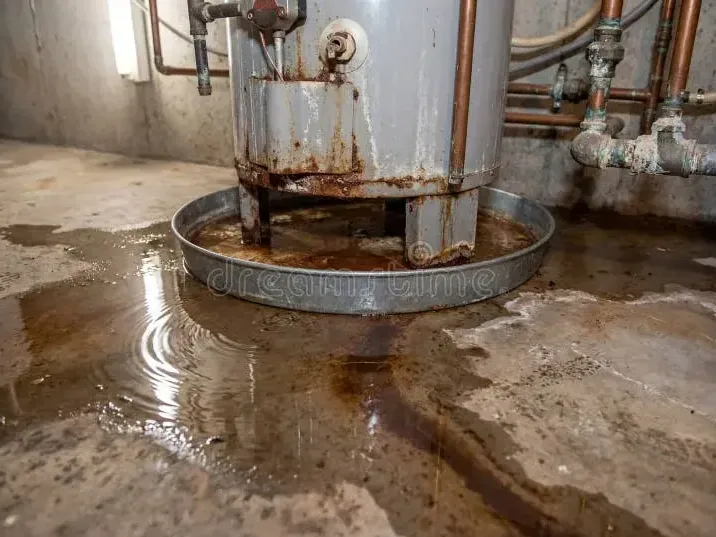
A water heater tank that fails can put a floor under water faster than most people expect. In Louisville, water heater work sits in the City's quick permit group, so the cleanup and the replacement are best planned together.
Key takeaways
- Louisville lists water heater work among its quick permits, which are reviewed by the next business day at the latest.
- Permits are applied for through the City's permit portal, and a contractor must hold a current Louisville contractor license and be listed on the application.
- Under Colorado rules, a homeowner who hires a plumbing contractor leaves the plumbing permit to the contractor.
- Inspection requests are handled the next business day.
- Water supply and power or gas to the tank are shut off first, then the water is extracted; the cleanup does not wait on the permit.
Why a failed tank floods so quickly
A tank holds enough water to cover a closet or a garage floor, and the supply pipe keeps feeding it until the valve is closed. The result is a large volume of water spreading in every direction at once.
Where the tank sits changes the damage. A tank in a closet sends water into wall framing, a tank in a garage spreads across the floor, and a tank in a utility room can reach cabinets and walls on both sides.
Louisville homes range from Old Town cottages to neighborhoods from roughly the 1970s to the 1990s, and newer townhomes and condos. In an attached home, water can also cross a shared wall.
A tank near the end of its life often gives warnings before it fails. Spotting them early means a planned replacement instead of an emergency.
- Rust colored water from the hot tap.
- Moisture or rust at the base of the tank.
- A relief valve that drips or weeps.
- A rumbling or popping sound while the tank heats.
What the City's permit groups say about water heater work
The City of Louisville Building Safety division issues permits, manages contractor licensing and conducts building, electrical, mechanical and plumbing inspections.
Its quick permit group covers air conditioning, furnace, water heater, minor electrical, mechanical and plumbing work, sewer and water repair, re-roofing and re-siding. Those permits are reviewed by the next business day at the latest.
Larger jobs move slower. Gas piping, decks, demolition, foundation repair and remodels take 1 to 2 weeks, and additions, new foundations, new homes and commercial work take 4 to 6 weeks.
Who pulls the permit
The answer depends on who does the work, and it is worth settling before the old tank comes out.
A permit is also a record, and a record helps a claim later. The permit and the inspection date show when the tank was replaced and by whom.
A homeowner who hires a contractor
Under Colorado rules, a homeowner who hires a plumbing contractor leaves the plumbing permit to the contractor. The contractor must hold a current Louisville contractor license and be listed on the application.
A homeowner who does the work
Only the homeowner or a registered plumbing contractor may do a plumbing project. Anyone unsure should ask the Building Safety division before work starts.
- Permits are applied for through the City's permit portal.
- Inspection requests are handled the next business day.
- The permit belongs to the replacement, not to the cleanup.
The first hours after the tank lets go
The first step is to stop new water coming in. Closing the cold water supply valve to the tank does that, and the power or gas to the unit is shut off at the unit.
Then the water on the floor becomes the job. Water extraction does not need to wait for the plumber or the permit, and the longer water sits, the further it wicks into the structure.
In an attached home, tell the neighbors at once. Water on a shared wall can reach another household before the first owner knows it is there.
- Close the cold water supply valve to the tank.
- Switch off the power to an electric unit or shut off the gas at a gas unit.
- Photograph the tank, the floor and the wet walls.
- Move belongings out of the wet area where it is safe to do so.
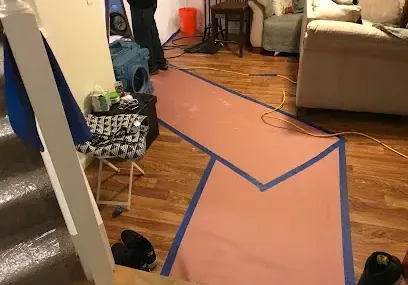
How the cleanup and the replacement fit together
A good plan runs both jobs in a set order, so neither one has to be redone. The restoration team and the plumber work around each other.
A full water heater leak cleanup covers extraction, removing what is too wet to save and drying the space. The new tank goes in once the area is safe to work in.
Planning pays off because both jobs share the same space. A plumber who arrives to an extracted, cleared closet works faster, and a restoration crew that knows the replacement date can schedule drying around it.
- Extraction first, so the area is clear for the plumber.
- Wet drywall, insulation and baseboards near the tank are removed.
- The replacement is installed under the right permit.
- Walls are closed only after the inspection and the drying readings are both done.
What gets removed and what gets dried
Clean water from a tank is not contaminated, so a lot can be dried in place if it is caught early. Porous materials that sat wet for a long time are the exception.
Buildings here vary a good deal, so the crew starts by identifying what each floor and lower wall is made of. That decides what is dried and what is cut out.
Hard floors such as tile usually clean up well. Carpet, laminate and soft wood take the worst of it, and a laminate floor that has swelled at the seams rarely recovers.
- Wood framing and subfloor are dried with air movers and dehumidifiers.
- Drywall that stays wet is cut out and replaced.
- Cabinet bases and baseboards are checked with a moisture meter.
- Insulation that soaked up water is removed.
Records for the claim
Keep the old tank until the adjuster has seen it, because its failure point is part of the evidence. The permit record and the plumber's invoice also belong in the file.
The restoration team logs moisture readings each day, so the file shows when the structure was dry and ready for repairs.
More pages on other water problems are in the local water damage section.
- The permit and the inspection date.
- The plumber's invoice.
- Photos of the failed tank and the wet floor.
- Moisture readings and the daily drying log.
Questions
Does a leaking water heater need a permit to replace?
In Louisville, water heater work is in the City's quick permit group. The Building Safety division can confirm what a specific job needs, and the plumbing contractor normally handles the permit.
Who pulls the plumbing permit if a contractor does the work?
Under Colorado rules, a homeowner who hires a plumbing contractor leaves the plumbing permit to the contractor.
Can cleanup start before the new tank is installed?
Yes. Extraction and drying do not depend on the replacement, and starting early limits how far the water spreads.
How are inspections requested?
Inspection requests are handled the next business day, and the contractor normally makes the request.
Is water from a water heater tank contaminated?
No, it starts as clean water. It can pick up dirt from a floor, so materials that stay wet for a long time are still removed.
What if the tank is in an attached home?
Tell the neighbors and the owner or manager right away. Water can cross a shared wall, and drying may need to cover more than one household.