Water Extraction and Removal in Louisville, CO
Standing water in hardwood, tile or carpet needs pumps and wands before it reaches the subfloor, and the right method depends on what each Louisville floor and lower wall is made of, from older cottages to newer townhomes.
(888) 532-8620Call for pumps and drying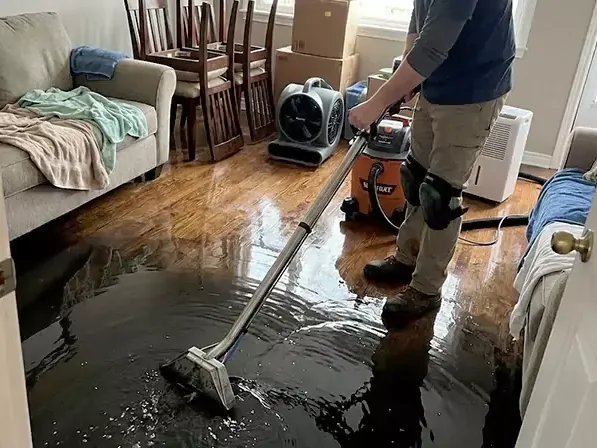
First steps for water extraction and removal
- Stop and secureThe source is shut off and electrical hazards are checked before anyone steps into the water.
- Pump and extractPumps clear deep water, then wands and weighted tools draw moisture from floors, carpet and pad.
- Scan the structureMoisture meters and an infrared camera locate water in walls and under flooring that the eye misses.
- Set the drying planRemoval limits are marked, equipment is placed and the first set of readings is recorded.
How water extraction and removal is handled, step by step
- 1
Assess
Source, water category and affected rooms are confirmed before equipment goes down.
- 2
Extract
Pumps and wands remove the standing water.
- 3
Dry
Air movers and dehumidifiers run until readings level off.
- 4
Verify
Final readings and photos go to the owner.
What does water extraction and removal cost in Louisville, CO?
Extraction alone usually runs $1,200 to $3,000 for a single room or hallway and $3,500 to $9,000 when several rooms or a full lower level are wet. Sewage or flood runoff raises the range to $8,000 to $20,000 or more.
Single room or hallway
- One affected area
- Clean supply water
- Extraction and a short dry out
Several rooms or a full lower level
- Several floors involved
- Pad and wall bases removed
- Several days of drying
Category 3 or flood runoff
- Contaminated water
- Porous materials removed
- Sanitizing and clearance
Ranges are typical, not a quote: the category of water, the square footage, the material class and how fast drying started move the number most. Run the water damage cost calculator for a closer planning range.
Why the building matters
Water extraction is the first physical step after a leak or flood, and it decides how much of the floor, wall and subfloor can be saved. Louisville homes vary enough that no single method fits them all.
Louisville housing runs from Old Town cottages and historic homes near Main Street to single-family neighborhoods with mature trees and newer infill homes, townhomes and condos. Each has different floor coverings, wall assemblies and finished lower levels, so extraction begins with identifying what the water has touched.
- Hardwood and tile Water is pulled from the surface and the seams, then dried slowly to limit cupping.
- Carpet and pad The pad is often lifted and discarded while the carpet is dried or replaced.
- Wall bases Baseboards come off so wet drywall edges can be measured.
What happens after the water is out
Once standing water is removed, moisture meters and a thermal camera show where the remaining water went. Dehumidifiers and air movers then dry what can be saved through structural drying, and anything porous that stayed wet too long is cut out and bagged.
Questions to settle before equipment goes down
The crew asks when the water started, whether it was clean supply water or came from a drain, in which case the job becomes sewage backup cleanup, and how many floors it crossed. Those answers set the category, the removal limits and the length of the dry out.
Further reading: Ready.gov flood safety and Colorado Division of Insurance.
Water extraction and removal across Louisville and nearby towns
The same service nearby: water extraction and removal in Erie, Lafayette, Broomfield.
Extraction crews work across ZIP codes 80027 and 80028, from Old Town and the Main Street area to the neighborhoods near South McCaslin Boulevard, Marshall Road, US Highway 36 and State Highway 42.
Related water damage services in Louisville
Water Extraction and Removal questions in Louisville
How soon should standing water be pumped out?
Right after the source is shut off. Water moves sideways into subfloor and drywall, so waiting enlarges the area that must be dried.
Does flooded hardwood always have to be replaced?
Not always. Boards that were wet briefly can often be dried with mats and airflow, while boards that have cupped badly or sat in water for days may need replacement.
Is wet carpet worth saving?
Carpet from a clean water leak is sometimes cleaned and dried in place, but the pad underneath is usually lifted and discarded. Carpet exposed to sewage or storm runoff is removed rather than saved.
What changes when the water came from a drain?
Drain water is contaminated, so the work moves to sewage backup cleanup with protective gear, removal of porous materials and sanitizing before any drying begins.
How is extraction different from drying?
Extraction removes liquid water that can be pumped or drawn up. Structural drying then removes the moisture held inside wood, drywall and concrete, which takes days of controlled airflow and dehumidification.
What does the adjuster receive?
A dated set of photos, moisture readings from the first and final visits, a record of materials removed and the equipment log.
Wet floors need pumps, not towels
Crews bring pumps, wands and drying equipment, then start once the source is under control. Call now, any hour.
(888) 532-8620Request water removal