Roof Leak Water Damage in Broomfield
Average precipitation rises from 0.44 inches in January to 1.64 inches in March and 2.07 inches in April, and nights stay below freezing through March. Snow and rain both test a roof in late winter and spring.
(888) 532-8620Call about the ceiling leak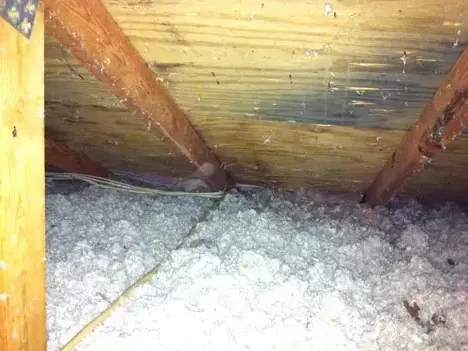
First steps for hail and roof leak water damage
- Contain the dripBuckets and tarps catch the water while the source is located.
- Remove wet insulationSoaked attic insulation and sagging drywall are taken out.
- Extract and dryPumps pull water from floors, then air movers dry ceilings and wall tops.
- Verify and documentReadings confirm dry framing, and photos support the claim.
How hail and roof leak water damage is handled, step by step
- 1
Call
Say where the stain or drip is.
- 2
Inspect
Meters trace the water through the attic.
- 3
Remove
Wet insulation and drywall come out.
- 4
Dry
Equipment runs until readings reach target.
What does hail and roof leak water damage cost in Broomfield, CO?
Roof leak water damage typically runs $1,000 to $20,000 or more. An attic and one ceiling stays at the low end, several ceilings and walls cost more, and a storm breach that spreads inside reaches the top range.
Attic and one ceiling
- Wet insulation out
- One ceiling dried
- Short equipment run
Several ceilings and walls
- Drywall sections removed
- Wall cavities dried
- Multi day equipment
Storm breach with spread
- Several rooms affected
- Wide material removal
- Longest drying run
Ranges are typical, not a quote: the category of water, the square footage, the material class and how fast drying started move the number most. Run the water damage cost calculator for a closer planning range.
Why late winter tests roofs
A roof leak often announces itself with a stain on a ceiling, but the water has usually been working in the attic for a while. Cleanup follows the water from the roof deck down through insulation, drywall and walls.
Mean daily lows are below freezing from November through March, so snow can sit and melt in cycles, finding gaps at flashing, vents and valleys. Spring rain then adds to it, which is why leaks often surface as the weather turns.
- Attic insulation soaks up water and stops insulating until it is replaced.
- Ceiling drywall stains, softens and can sag under the weight of trapped water.
- Wall tops take on moisture where the ceiling meets the framing.
What interior cleanup covers
Wet insulation and any sagging drywall are removed, buckets or tarps catch the active drip, and air movers and dehumidifiers dry the framing. The roof itself is repaired by a roofer, while water extraction and drying handle everything inside.
A leak that reaches the walls
If water has run down inside a wall, the cavity is opened and dried so the finished surface is not left hiding moisture. Heavier storm breaches may call for structural drying across several rooms.
Further reading: National Weather Service thunderstorm safety and Colorado Division of Insurance.
Hail and roof leak water damage across Broomfield and nearby towns
The same service nearby: hail and roof leak water damage in Erie, Lafayette, Louisville.
Roof leak cleanup is available across the city and county, ZIP codes 80020, 80021 and 80023, from Broomfield Heights and Depot Hill to Interlocken, along State Highway 7 and US 36.
Related water damage services in Broomfield
Hail and Roof Leak Water Damage questions in Broomfield
Is a roof leak covered by insurance?
It depends on the cause and the policy. Storm openings are treated differently from wear, so the adjuster decides, and dated photos plus moisture readings help.
Who repairs the roof itself?
A roofer repairs the shingles, flashing or vents. Restoration covers the inside: removing wet insulation and drywall, drying the framing and documenting it all.
Can wet attic insulation be dried in place?
Rarely. Fiberglass and cellulose hold water and lose their value once soaked, so wet sections are usually removed and replaced after the framing is dry.
Why do leaks show up in spring?
Snow that sat on the roof melts in cycles, and April brings 2.07 inches of average precipitation. Water finds gaps in flashing and ceilings begin to stain.
How soon does mold follow a roof leak?
Mold can start in a 24 to 48 hour window if insulation and drywall stay wet. Removing soaked material and drying the framing is what stops the clock.
Dry out the attic and ceiling
Water that gets past the roof keeps spreading through insulation and drywall until it is removed. A call now starts the interior cleanup.
(888) 532-8620Get the roof leak scope