Structural Drying and Dehumidification in Lafayette
Pulling the standing water out is only half of a water loss. The rest is drying floors, walls and framing with air movers, dehumidifiers and daily moisture readings, until the material is back to normal levels.
(888) 532-8620Plan the drying equipment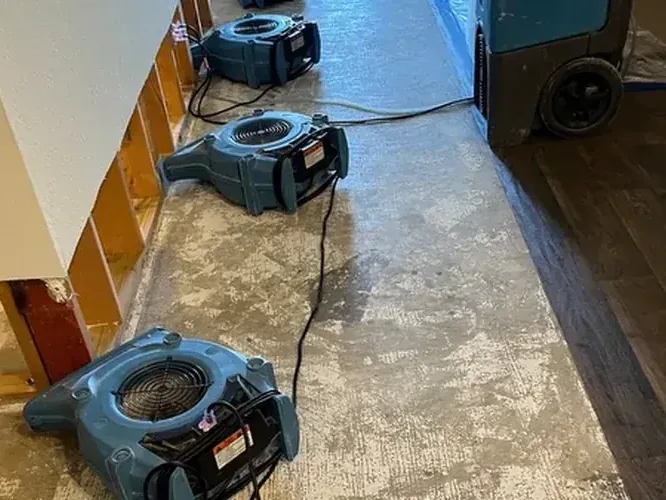
First steps for structural drying and dehumidification
- Remove standing waterExtraction comes first so equipment dries material and not puddles.
- Open wet areasBaseboards and wall bottoms come off so air can reach the cavity.
- Set the equipmentAir movers and dehumidifiers are placed from the meter map.
- Check each visitReadings repeat until wet material reaches the dry goal.
How structural drying and dehumidification is handled, step by step
- 1
Baseline
Readings are taken in wet and unaffected areas.
- 2
Place
Equipment is positioned from the moisture map.
- 3
Monitor
Readings are logged each visit.
- 4
Release
Equipment is removed once material reads dry.
What does structural drying and dehumidification cost in Lafayette, CO?
Drying costs run from $1,200 to $22,000+, depending on the number of rooms, the density of the materials and how many days of equipment are needed. Readings from a walkthrough shape the plan.
One to two rooms
- Air movers and a dehumidifier
- Daily readings
- Short equipment stay
Whole level
- Equipment across every room
- Wall cavity drying
- Readings logged each visit
Dense materials or Class 4
- Specialty drying systems
- Hardwood and concrete focus
- Longer monitoring
Ranges are typical, not a quote: the category of water, the square footage, the material class and how fast drying started move the number most. Run the water damage cost calculator for a closer planning range.
Equipment doing the work
Drying is a measured process, not a guess. Moisture readings are taken at the start, equipment is placed to move and remove moisture, and readings repeat until wet material reaches the dry goal.
Air movers push dry air across wet surfaces, while dehumidifiers pull the released moisture out of the room so it does not settle into other materials. Air scrubbers and cavity drying systems are added when the loss calls for them.
- Air movers speed evaporation from floors and wall bottoms.
- Dehumidifiers keep the room air dry enough to keep drying.
- Meters show whether wet material is truly improving.
The local housing mix
About 70 percent of Lafayette homes were built between 1970 and 2000, and more than 600 date to before 1950, so drying plans range from modern layered flooring to older plank floors. Equipment is set to the material rather than the calendar, and no drying time is promised before readings are in. For flooded lower levels, see basement flooding cleanup.
When drying is finished
Drying ends when readings match an unaffected reference area, not when surfaces feel dry. Equipment comes out only then, which keeps the 24 to 48 hour mold window from becoming a hidden growth problem. Start with water extraction when standing water is still present.
Further reading: Ready.gov flood safety and EPA WaterSense.
Structural drying and dehumidification across Lafayette and nearby towns
The same service nearby: structural drying and dehumidification in Erie, Louisville, Broomfield.
Drying visits cover 80026, including Old Town and the Public Road area, Indian Peaks, Avalon Meadows and Blue Sage, with routes along Baseline Road, State Highway 7 and South Boulder Road.
Related water damage services in Lafayette
Structural Drying and Dehumidification questions in Lafayette
How long does structural drying take?
It depends on the material, the water category and the amount absorbed, so no honest number exists before readings. Equipment leaves only when the dry goal is met.
Why are dehumidifiers needed if fans are running?
Fans move moisture off surfaces into the air, and a dehumidifier takes it out of the room. Without that second step, moisture settles back into walls and furniture.
Can wet walls be dried without opening them?
Sometimes, using small holes or cavity drying systems. Saturated insulation or board that cannot dry in place is removed.
Does the equipment use a lot of power?
Air movers and dehumidifiers run all day and draw real electricity, a normal part of the process that often appears in the claim.
How is a home confirmed dry?
Final readings are compared with an unaffected area of the same material. The logs can go to the adjuster.
Finish the dry-out
Describe what flooded and what is still wet, and the crew will build a drying plan around real readings. Call now, any hour.
(888) 532-8620Call about the drying