Structural Drying in Longmont
Once the standing water is gone, moisture still sits inside framing, subfloor and drywall. Structural drying uses air movers, dehumidifiers and meter checks to pull it out and prove the building is dry again.
(888) 532-8620Set up drying equipment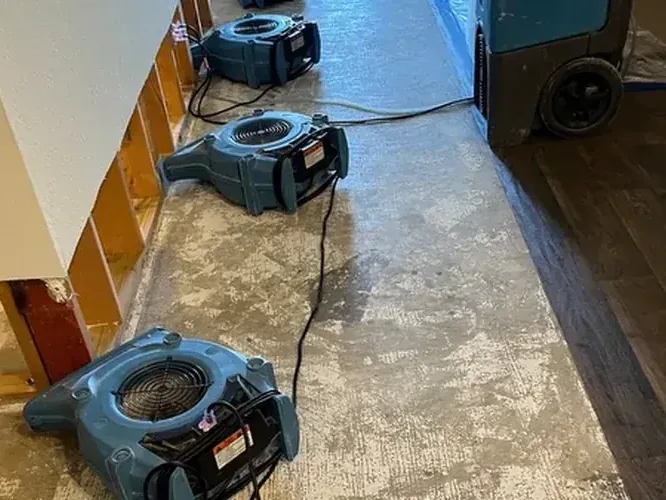
First steps for structural drying and dehumidification
- Finish extractionStanding water and ruined materials need to be gone before drying starts.
- Seal the wet areaDoors and openings are closed so the machines work on the right space.
- Start the equipmentAir movers and dehumidifiers run day and night as set up.
- Call for dryingCall now, any hour, and say what has already been extracted.
How structural drying and dehumidification is handled, step by step
- 1
Survey the structure
Meters set the drying goals.
- 2
Place the equipment
Air movers and dehumidifiers go in.
- 3
Check each visit
Readings show if moisture is falling.
- 4
Remove the machines
Equipment leaves once readings are dry.
What does structural drying and dehumidification cost in Longmont, CO?
Drying work usually runs about $1,200 to $22,000 or more, driven by the size of the wet area, how dense the materials are and how many visits the readings require. The written estimate comes after a survey.
One to two rooms
- Small wet area
- Few pieces of equipment
- Short monitoring
Whole level
- Entire floor affected
- More air movers
- Regular readings
Dense materials or Class 4
- Concrete and thick wood
- Specialty drying
- Longer equipment runs
Ranges are typical, not a quote: the category of water, the square footage, the material class and how fast drying started move the number most. Run the water damage cost calculator for a closer planning range.
How drying equipment works
Pumping the water out does not make a building dry. Wood, drywall and concrete hold moisture that can only leave as vapor, and structural drying is the controlled process that moves it out of the structure and into dehumidifiers.
Air movers push dry air across wet surfaces so moisture evaporates, and dehumidifiers pull that vapor out of the room and drain it away. Closed doors, sealed openings and plastic sheeting keep the wet zone separate so the machines work on the right space.
- Air movers speed evaporation off wet surfaces
- Dehumidifiers remove vapor from the air
- Meters track progress at every visit
Placement and monitoring
Equipment is placed by what the survey finds, then adjusted at each visit as readings drop. Machines in the wrong spot or running too long waste time, so logs of temperature, humidity and moisture content decide when each one is pulled.
When the job is finished
Drying ends when the readings match dry reference points, not after a set number of days. Final readings are logged for the owner. Wet materials are normally removed first through water extraction, and larger losses may need commercial water damage planning.
Further reading: Ready.gov flood safety and EPA WaterSense.
Structural drying and dehumidification across Longmont and nearby towns
The same service nearby: structural drying and dehumidification in Erie, Frederick, Lafayette.
Drying equipment goes into properties across ZIP codes 80501, 80503 and 80504, whether the wet space sits near Main Street, along US Highway 287 or out on the eastern side of town.
Related water damage services in Longmont
Structural Drying and Dehumidification questions in Longmont
Why does a building need drying after extraction?
Extraction removes liquid water only. Moisture held in wood, drywall and concrete stays behind and can cause swelling and decay, and mold can begin to grow after 24 to 48 hours.
How is drying progress measured?
Moisture meters read materials at set test points on every visit, and the numbers are compared with dry reference readings from unaffected areas.
Does dehumidification use much power?
The machines run continuously and draw power, so drying is set up efficiently and stopped as soon as readings allow.
Can walls be dried without opening them?
Sometimes. Small holes or removed baseboards let air reach the cavity, but saturated insulation or drywall is normally cut out first.
How long does drying take?
It depends on the materials and the amount of moisture, so no fixed day count applies. Readings, not a calendar, decide when the equipment leaves.
Water gone but walls damp?
A dispatcher records what has been extracted and which rooms are wet, then schedules a survey and equipment placement.
(888) 532-8620Longmont drying help